

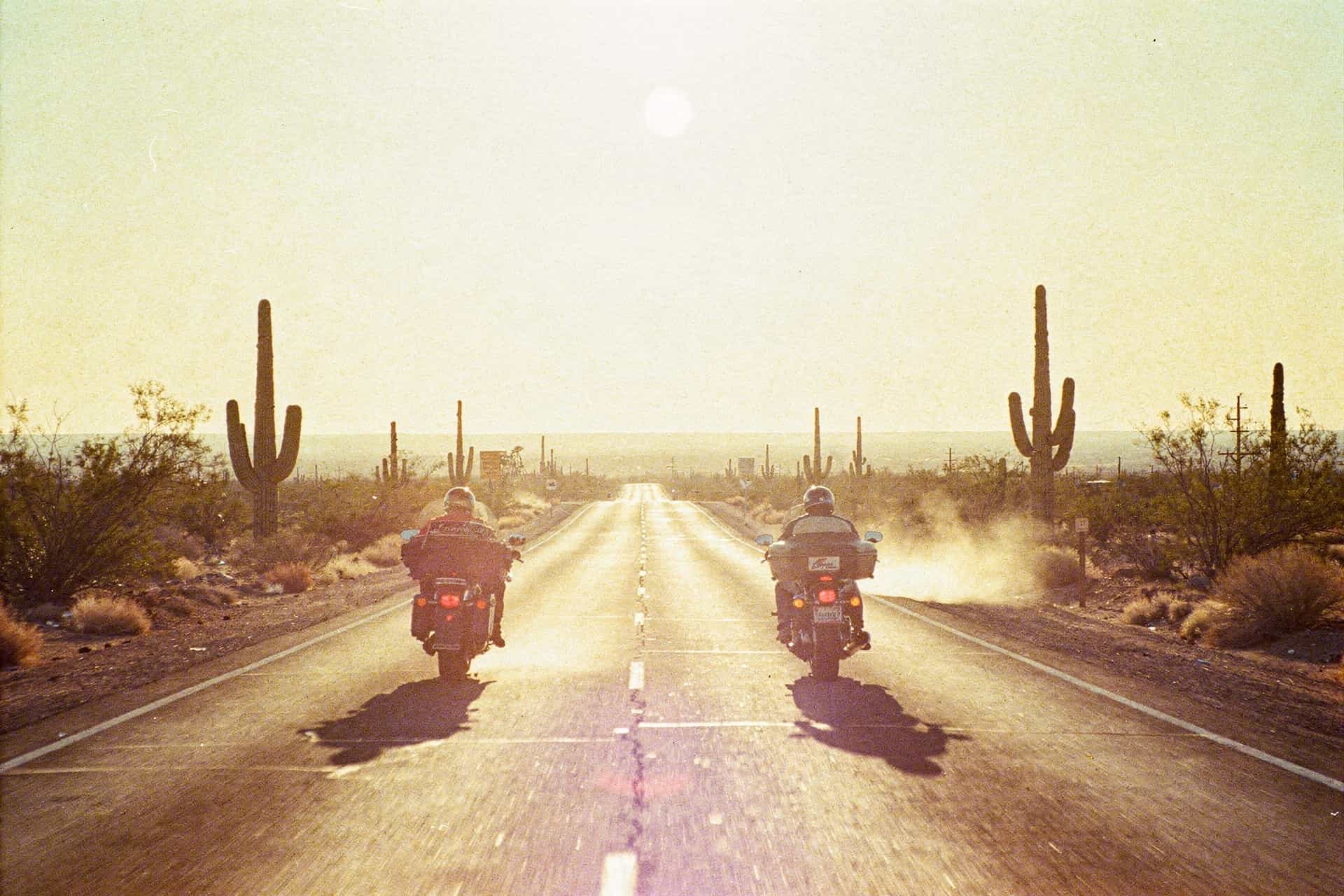
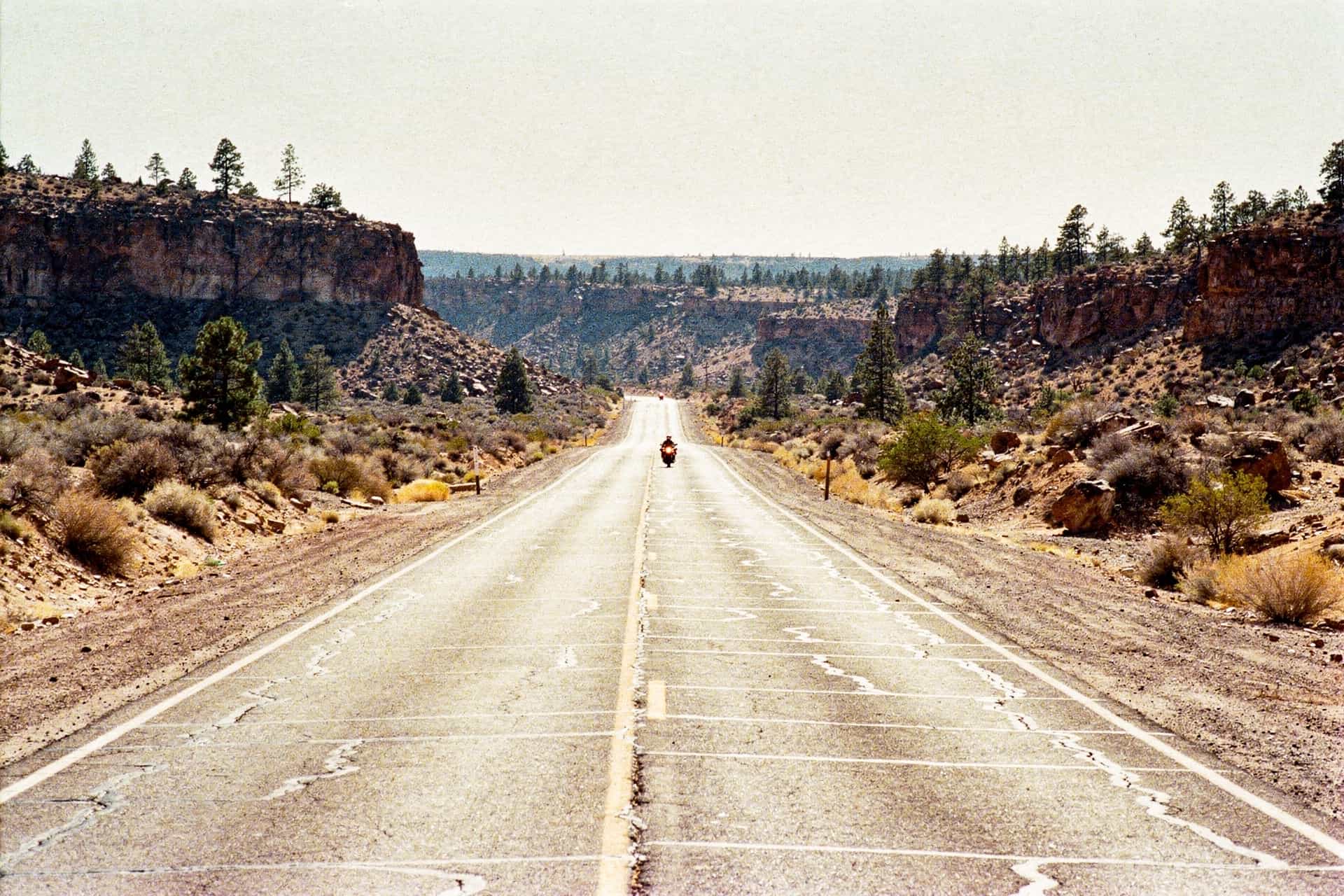
Somewhere on the two-lane between Phoenix and Payson, the air temperature drops twenty degrees in forty minutes. Saguaros give way to ponderosa pines. The road climbs through canyon country and puts you into high forest that feels like a different state from the Sonoran Desert you left an hour earlier. That terrain is a large part of why organized riding took hold in Arizona and never let go.
Arizona is not California. It never had the density of clubs that the Golden State built after the war. What it has instead is a small number of well-documented events that reshaped the entire Southwest, and two federal cases that are usually described by their indictments rather than by how they actually ended. This page is about what the record supports, with dates attached, and it is not a ranking of anything.
| Field | Documented detail | Date of record |
|---|---|---|
| Dirty Dozen MC founding | Phoenix area, founded in the 1960s | 1960s |
| Patchover vote to the Hells Angels | Roughly 80 members present voted yes | 1996 |
| Patchover completed | Official after a 14-month prospecting period | 1997 |
| Operation Black Biscuit | ATF undercover investigation, raids and indictment | 2001 to 2003 |
| Black Biscuit outcome | Serious charges largely dismissed or reduced | by 2006 |
| Vagos racketeering indictment naming Arizona among affected states | 23 defendants charged, unsealed in Las Vegas | June 2017 |
| Vagos case outcome | First eight defendants acquitted, remaining charges dropped | 2020 |
For broader cluster context, our motorcycle clubs complete guide is the reference page.
The Dirty Dozen MC and the 1996 Vote
You cannot discuss motorcycle clubs in Arizona without starting here. The Dirty Dozen Motorcycle Club was founded in the Phoenix area in the 1960s and was the dominant one-percenter presence in the state for roughly three decades. It stayed regional on purpose. While the national clubs built multi-state and multi-country structures, the Dirty Dozen held Arizona and did not chase expansion.
The founding details deserve a note, because they are reported with more confidence than the sources justify. The date most often given is 1964 or 1965, and South Scottsdale is the usual founding location. The most substantial published account, a 2015 Phoenix New Times piece built on interviews including an original member, says only that the club began in the 1960s and describes a thirty-year run in Arizona. We have removed the specific 1964 date from this page because we cannot trace it to a source that would support it, and we have removed a peak-membership figure for the same reason.
What that reporting does establish is the shape of the patchover. The decision was made by vote, at a former club venue, with roughly 80 members present, and it went yes in 1996 after failing in previous attempts. The club then prospected for the Hells Angels for about 14 months, and the change became official in 1997.
That sequence is the part worth understanding. The published account describes a member vote followed by a prospecting period, not a hostile takeover. It also reports that earlier attempts had failed, showing that the decision was contested within the organization. For the broader picture of how these organizations relate to each other, our major motorcycle clubs overview is the comparison page.
Hells Angels in Arizona and Operation Black Biscuit
The 1997 patchover gave the Hells Angels an established Arizona presence more or less overnight, along with the local relationships and standing that would have taken years to build from scratch.
The best-documented chapter of what followed is Operation Black Biscuit. ATF agent Jay Dobyns worked undercover inside Arizona Hells Angels chapters from 2001 into 2003, a penetration of more than twenty months that ranks among the longest the agency has run. Raids in the summer of 2003 produced dozens of arrests and a racketeering indictment naming sixteen Hells Angels members and associates on charges including murder.
Then it came apart, and this is the half of the story that most write-ups skip. Disputes between the ATF and federal prosecutors over disclosure of informant-related evidence undercut the case, and the most serious charges were dismissed or reduced rather than tried to verdict. Dobyns’ identity became public, he and his family faced threats, and he later sued the ATF over its handling of those threats. A federal claims judge criticized the agency’s conduct while awarding him a fraction of what he had sought.
The honest summary is that Black Biscuit was an extraordinary investigative effort that did not produce the prosecutions it was built for. Anyone citing it as proof of anything about the organization should also cite how it ended.
Cave Creek, north of Phoenix, is the location most associated with Arizona riding culture in general: a stretch of desert highway lined with saloons and businesses that cater to riders, busy with motorcycles most weekends. Riders on the same road there range from club members in three-piece patches to retirees on touring rigs. We are not going to characterize which chapters operate where, because current chapter geography is exactly the kind of detail nobody should be publishing from unsourced maps.
The Vagos Case and What It Actually Established
The Vagos MC, the green-and-red organization founded in San Bernardino in 1965, appears in the Arizona record through a federal case brought elsewhere.
In June 2017, a racketeering indictment was unsealed in Las Vegas charging 23 alleged Vagos members and associates. Justice Department material described the organization as having roughly 87 chapters across at least seven countries and named Arizona among the states where the alleged conduct occurred, alongside California, Hawaii, Oregon, and Nevada. The underlying allegations reached back to 2005 and included the 2011 killing of a Hells Angels figure at a northern Nevada casino.
The case ended in acquittals. In February 2020, a jury acquitted the first eight defendants tried, including the organization’s former international president. Prosecutors then moved to drop the case against the remaining defendants.
Two things follow from that, and both matter for how you read anything about MC territory in the Southwest. First, an indictment is an allegation, and this one was tested and rejected by a jury. Second, the states named in a charging document describe where alleged conduct occurred, not a current map of chapters. Our 1 percenter guide covers the difference between an agency classification, a charge, and a verdict in more detail, and it is the single most useful distinction to carry into any article about these organizations.
Territory Claims We Are Not Going to Make
Most Arizona MC articles include a paragraph explaining which club controls which part of the state, usually built around the idea that the north leans one way and the corridor toward the border leans another.
We have not found a current, dated, public document that supports any version of that. Older law enforcement threat assessments contain state-level presence claims, but they are archived material from specific years and were never intended as current maps. Repeating them without the publication date turns a historical snapshot into a false claim about today.
So the useful version of that section is short: Arizona is large, its population centers are far apart, and organized riding here is spread across highway corridors rather than dense urban blocks. Beyond that, we do not know, and neither do the sites that say they do.
Riding Clubs and Veterans’ Organizations
The one-percenter clubs get the coverage. Most organized riding in Arizona happens somewhere else entirely.
The state’s military footprint includes Luke Air Force Base near Phoenix, Fort Huachuca near Sierra Vista, Davis-Monthan Air Force Base in Tucson, and Marine Corps Air Station Yuma. Veterans, faith-based groups, brand clubs, and social riding organizations are part of the broader riding landscape, but they should not be treated as interchangeable with the organizations discussed in the case records above.
The distinction between an MC, a riding club, a ministry, and an independent rider depends on the named organization’s structure rather than on a generic vest glossary. Our Christian motorcycle clubs guide covers one part of that wider landscape.
If you want gear that reads as biker culture without imitating any club’s insignia, our patches and merch collection is built for that. It is apparel, not protective riding equipment, and it does not signal affiliation with anything.
Why the Riding Is Actually Like This
The environment shaped the culture, and the numbers behind it are worth getting right.
A season that does not really stop
The Arizona State Climate Office puts Phoenix at roughly 85 percent of possible sunshine over the year, with monthly figures ranging from the high seventies in midwinter to the low nineties in June, and the city receives sunshine on more than 300 days annually. Low-desert summer is the exception rather than the rule: afternoons above 110 degrees make midday riding hazardous. From October through April, daytime temperatures are far below the summer extremes, allowing riding through months when colder regions are inactive.
Elevation you can ride through in a day
Arizona runs from roughly 70 feet above sea level where the Colorado River leaves the state near Yuma to 12,633 feet at Humphreys Peak outside Flagstaff. A single day’s ride can take you from desert floor to alpine forest and back. The run from Phoenix to Prescott gains several thousand feet in under a hundred miles, and the temperature, vegetation, and road character all change with it. That is why mountain towns like Prescott, Payson, and Pinetop have functioned as summer destinations for Arizona riding groups for generations.
Roads with a record
Route 66 crosses the northern part of the state from Holbrook through Flagstaff to Kingman. The Apache Trail east of Phoenix follows an old stagecoach route through the Superstition Mountains, unpaved in sections and narrow throughout. The Coronado Trail on US 191 runs 120 miles between Clifton and Springerville, and the Arizona Department of Transportation describes that stretch as a route of 460 curves, with speeds dropping to 10 miles per hour in places and long sections without guardrails. ADOT specifically notes it as favored by motorcycles.
Bars, Rallies, and Heat
Arizona’s motorcycle bar culture concentrates in a few known strips: Cave Creek’s main road north of Phoenix, Prescott’s Whiskey Row, Allen Street in Tombstone, and several spots in Tucson.
The state hosts recurring rallies through the year, including Arizona Bike Week in the Scottsdale and Cave Creek area in spring, and a Tombstone event that leans into the town’s frontier history. Event dates, venues, and formats change year to year, so check the organizers directly rather than trusting a date printed in an article.
The heat is a genuine safety factor rather than a figure of speech. Pavement temperatures in the low desert in July affect tire behavior, and dehydration degrades judgment before most riders notice it. Any organized ride in the low desert between May and September needs planning around water, shade, and timing, which is why experienced Arizona riders leave early and aim to be off the road by midday. Our biker gear guide covers what to wear when heat is a hazard rather than a comfort question.
Do not infer a universal code of conduct from an online glossary. Patch and club customs vary by organization and era, as our Detroit history and patch meaning guide explain.
What Holds Up
Strip out the territory maps and the confident chapter counts and Arizona still has a substantial documented MC history: a regional club whose members voted to join a larger organization, an undercover operation whose prosecutions largely ended in dismissals or reduced charges, and a separate racketeering case that ended in acquittals.
What has not changed across any of it is the reason riders are here in the first place. Empty two-lane through country that looks purpose-built for motorcycles, mountains that offer an exit from the heat, and 460 curves on a road that most people never find. The desert does not care what is on your back. It only asks whether you planned for the water.
Sources
- Chico Mora Led the Dirty Dozen Into the Hells Angels’ Camp, Phoenix New Times, June 24, 2015. Interview-based reporting on the 1996 patchover vote, the roughly 80 members present, the 14-month prospecting period, and the club’s thirty-year Arizona run.
- Twenty-Three Alleged Vagos Outlaw Motorcycle Gang Members and Associates Indicted on Federal Racketeering Charges, US Department of Justice, June 2017. Primary source for the 2017 indictment, the states named including Arizona, and the organization description.
- Prosecutors want charges dropped against Vagos gang members, Nevada Appeal, April 2, 2020. Outcome of the 2017 case after the February 2020 acquittals.
- Former undercover agent recalls infiltrating the Hells Angels, Fox News. Interview with the lead Operation Black Biscuit undercover agent on the investigation and its aftermath.
- Vindication for Jay Dobyns, ex-ATF agent who infiltrated the Hells Angels, Phoenix New Times. Reporting on the court ruling in Dobyns’ claim against the ATF, used for the aftermath of Black Biscuit.
- Coronado Trail leads to Arizona’s heavenly high country, Arizona Department of Transportation. State transportation agency source for the 120-mile length, the 460-curve figure, and the road’s suitability for motorcycles.
- Climate of Phoenix, Arizona State Climate Office. Source for the percent-of-possible-sunshine figures and the seasonal temperature pattern.
- Barker, Thomas. Biker Gangs and Transnational Organized Crime. Anderson Publishing, 2nd edition, 2014. Academic survey covering the Dirty Dozen patchover and Southwest one-percenter history.
- Quinn, James F. “Angels, Bandidos, Outlaws, and Pagans: The Evolution of Organized Crime among the Big Four 1%er Motorcycle Clubs.” Deviant Behavior, vol. 22, no. 4, 2001, pp. 379-399. Academic analysis of how these organizations relate to each other territorially.