The Hells Angels Motorcycle Club is the most heavily documented motorcycle club in the world. Seven decades of court records, federal investigations, trademark litigation, journalism and academic study carry its name, which makes it one of the few clubs where a page like this can lean on primary sources instead of folklore.
That documentation cuts both ways. It also means the numbers people quote about the club are usually old federal estimates repeated without a date. This page attaches a date to every figure.
| Field | What the record supports | Source and date |
|---|---|---|
| Founded | March 17, 1948, Fontana, California | Britannica; club histories |
| Founding origin | Several founding members had ridden with the Pissed Off Bastards of Bloomington | Lavigne, 1996 |
| Name origin | US military aviation units; suggested by Arvid Olson | Club accounts; Britannica |
| Centre patch | Death head, a winged skull in profile; the club’s own history credits the official design to a past San Francisco chapter president | Club-published history |
| Organising chapter | Oakland, co-founded 1957 by Ralph “Sonny” Barger | NPR obituary, 2022 |
| Membership estimate | 2,000 to 2,500 members, more than 230 US chapters, 26 foreign countries | DOJ National Drug Intelligence Center, 2008 report to the Attorney General |
| Federal classification | Outlaw motorcycle gang | DOJ, archived profiles |
| Trademarks | Name and death head have been registered and enforced through litigation | USPTO records; federal dockets |
This article covers the founding, the Oakland chapter and Sonny Barger, Altamont, the death head and its trademark history, the documented international expansion, and the federal cases. For the broader cluster context, our motorcycle clubs complete guide is the cluster reference.
Fontana, 1948: Where It Started
The club was founded on March 17, 1948 in Fontana, California, a working-class town in San Bernardino County east of Los Angeles. The founding members were largely veterans returning from the Second World War who had bonded over motorcycles and found peacetime life narrow.
The name came from the military. “Hell’s Angels” had been used by aviation units including the 303rd Bombardment Group and the Flying Tigers’ 3rd Pursuit Squadron, and Howard Hughes used it for his 1930 aerial combat film. Club accounts credit Arvid Olson, an associate of the founders who had served with the Flying Tigers, with suggesting it. The founders took it, dropped the apostrophe and stitched it onto their cuts.
Early membership drew heavily from the Pissed Off Bastards of Bloomington, an earlier San Bernardino-area club. That connection is documented in Yves Lavigne’s Hells Angels: Three Can Keep a Secret If Two Are Dead (1996).
Those first years were small. The club would have stayed a Southern California footnote if not for what happened 400 miles north.
The Oakland Chapter and Sonny Barger
In 1957 Ralph “Sonny” Barger co-founded the Oakland chapter, which became central to the club’s later organisation.
Barger was a high school dropout and Army veteran. Published accounts credit him with promoting standardised patches, bylaws and a hierarchy across the organisation.
By the early 1960s Oakland was the de facto mother chapter, and other chapters looked to it for direction on membership standards and on how the death head should be worn.
Barger was also the first Hells Angels leader to engage directly with the press. He gave interviews, wrote letters to newspapers and later authored several books, including Hell’s Angel: The Life and Times of Sonny Barger and the Hell’s Angels Motorcycle Club (2000). He was willing to be the public face at a time when most club leaders avoided cameras.
He died on June 29, 2022 at the age of 83. His death was announced on his own social media with a message he had written in advance: “If you are reading this message, you’ll know that I’m gone.”
Hunter S. Thompson and the Making of a Reputation
In 1965 Hunter S. Thompson began riding with the club, spending about a year around the Oakland and San Francisco chapters. The result was Hell’s Angels: The Strange and Terrible Saga of the Outlaw Motorcycle Gangs, published in 1967.
Thompson’s book portrayed the Angels as complicated rather than cartoonish: their violence and their loyalty, their poverty and their pride, their hostility to outsiders and their brotherhood with each other.
The book made the club internationally known. Before it, they were a California phenomenon covered mainly in sensationalised newspaper reports. After it, they were a cultural reference point.
Near the end of his time with the club, several members beat Thompson severely. In his account, the confrontation began after he objected to a member abusing his wife and kicking a dog. Other accounts say suspicion about Thompson earning money from the book had already strained the relationship. The reason should not be reduced to a settled money dispute.
Altamont: December 6, 1969
The Altamont Speedway free concert on December 6, 1969 remains the most infamous single event in the club’s history.
The Rolling Stones hired Hells Angels members to provide security for the free concert. The payment, according to multiple accounts including the documentary Gimme Shelter (1970), was $500 worth of beer. Roughly 300,000 people attended.
The day descended into violence. During the Stones’ set, 18-year-old Meredith Hunter approached the stage. Footage in Gimme Shelter shows Hunter drawing a revolver. A Hells Angels member, Alan Passaro, stabbed him and Hunter died at the scene. Passaro was tried for murder and acquitted on self-defence grounds in 1971, largely on the film evidence showing the gun.
Three other people died at Altamont: two in a hit-and-run accident and one who drowned in an irrigation canal. The concert had been billed as the West Coast’s answer to Woodstock. Many journalists and historians instead cite it as the symbolic end of the 1960s counterculture.
For the club, Altamont created a permanent association with violence in public memory that no subsequent decade has undone.
The Death Head: Patch and Trademark
The death head, a winged skull in profile, is a registered mark that the club has enforced through litigation. The federal docket includes actions over unauthorised use of the emblem and similar designs.
The club’s own published history credits the official design to Frank Sadilek, a past president of the San Francisco chapter, with the early emblem drawing on Second World War squadron insignia. That attribution comes from the club rather than from an independent archive, and at least one account from an early member disputes it. It is the club’s version of its own origin story, which is worth knowing and worth labelling.
The enforcement record is not in dispute. The club has sued fashion labels, film studios and independent artists over the death head and over designs resembling it, including a 2010 federal case against Alexander McQueen’s label over a scarf and a ring featuring winged skulls. The strategy on the docket is the one any global brand uses on its logo: register the mark, then litigate.
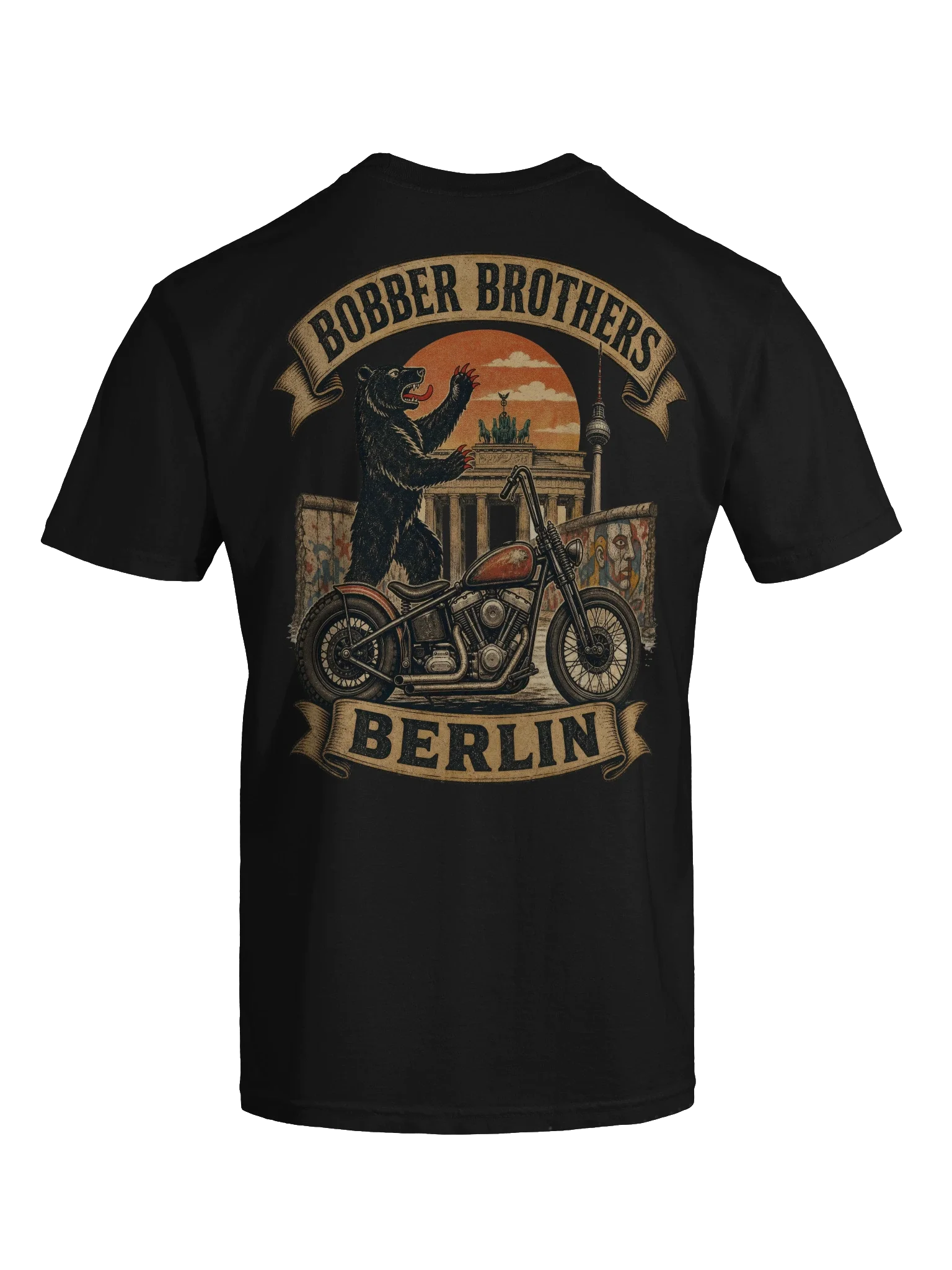
The trademark record sets a clear boundary for motorcycle merchandise. Our accessories use Bobber Brothers artwork, carry no club insignia and are not affiliated with or licensed by the Hells Angels.
The Club Structure: How the Hells Angels Operate
The club follows a hierarchy common among outlaw motorcycle clubs and has refined it over seven decades. The description below reflects how the club has been documented in court records and published accounts; details vary by chapter and by era, so read it as a general pattern rather than a rulebook.
Prospect period. Before full membership a candidate serves as a hang-around and then as a prospect, often for a year or more, riding with the club and taking on tasks assigned by full members. Full membership requires a chapter vote.
Chapter structure. Each chapter operates semi-independently under the club’s overall bylaws. Officers include a president, vice president, secretary, treasurer and sergeant at arms, who handles internal discipline and security.
The colours. A full-patch member wears a three-piece patch: the top rocker reading “Hells Angels”, the centre death head and a bottom rocker naming the chapter location. Wearing the patch without membership is treated by the club as a serious offence, a posture shared across one-percenter clubs.
Riding requirements. Members have generally been expected to own and ride a Harley-Davidson. That expectation has been consistent since the early Oakland years, though enforcement has varied by chapter and by period.
Rivalries and Conflicts
The club’s history includes documented conflicts with other clubs.
Mongols MC. The relationship with the Mongols Motorcycle Club has produced documented violence, most clearly the April 2002 brawl between members of the two clubs at a Laughlin, Nevada casino in which three people died. Published accounts say the Mongols were founded in 1969 in Southern California partly by Hispanic riders who had been refused entry to the Hells Angels; that account comes from club histories rather than from a primary record.
Bandidos MC. The two clubs fought a three-year conflict in Scandinavia from 1994 to 1997 involving bombings, shootings and military weapons, ending in a negotiated truce in September 1997. Our Bandidos MC article covers that conflict from the other side.
Outlaws MC. The best-documented American episode of the conflict with the Outlaws came in the Midwest in the 1990s, when the Hells Angels absorbed an established Illinois club and a prosecuted campaign of bombings and shootings followed. A federal appeals court set that sequence out in 2002. Our Hell’s Henchmen MC Chicago article covers the case and the appellate record behind it.
These rivalries are part of the broader outlaw motorcycle club landscape. Court records in some conflicts describe disputes over territory and criminal activity, but motives vary by case and should not be assumed without evidence.
Global Expansion
What started in Fontana did not stay in California. The chronology below combines an outside reference work with the club’s own published history, and the sourcing is flagged per entry because the two do not carry equal weight.
- 1961, Auckland, New Zealand. Te Ara, the official Encyclopedia of New Zealand, records that an Auckland club formally affiliated with its American counterpart in 1961 and became the first chapter chartered outside California. This is the best-sourced entry on the list.
- July 1969, London, England. The club’s own charter histories say the first two European charters were issued on 30 July 1969, in East and South London, sponsored by the San Francisco and Oakland chapters. This is self-published and should be read as the club’s account.
- Mid-1970s, Australia. Published accounts place the first Australian charters in Melbourne and Sydney in this period. Secondary writing rather than a primary record.
- 1977, Montreal, Canada. Published accounts describe an existing Quebec club patching over, bringing the Hells Angels into Canada. Widely repeated; we could not match the date to a primary record.
- 1984, Rio de Janeiro. Reported as the first South American charter. Secondary writing.
- 1993, Johannesburg. Reported as the club’s entry into Africa. Secondary writing.
On the size of the club today, we are going to stop where the evidence stops. The most specific dated federal estimate we could source is the 2008 Justice Department report to the Attorney General, which described 2,000 to 2,500 members in more than 230 chapters in the United States and 26 foreign countries. That is an eighteen-year-old figure. The “over 30 countries” and “3,000 to 3,500 members” numbers that circulate online have no dated source we could find, and earlier versions of this page repeated them. They are gone.
Published club histories describe expansion through formally issued charters rather than self-declared chapters. That is a description from club accounts, not a current public rulebook.
Federal Cases and RICO
The US government has repeatedly used the Racketeer Influenced and Corrupt Organizations Act against Hells Angels members. RICO lets prosecutors charge participation in an ongoing criminal enterprise rather than prosecuting individual offences in isolation.
Operation Black Biscuit, 2001 to 2003. A 2014 United States Court of Federal Claims opinion describes an ATF undercover investigation that ran from early 2001 to July 2003. It says the operation and parallel raids ended with indictments of 36 people on racketeering and murder charges, 16 directly from the undercover work. The same opinion says later case outcomes included reduced sentences for some defendants and dismissed charges for others.
The federal prosecution over the separate 2002 Laughlin casino violence also narrowed substantially. In October 2006 the US Attorney for Nevada said six Hells Angels members pleaded guilty to violent-assault charges and charges against the remaining defendants were dismissed after the court suppressed key witness testimony over a discovery violation. The official statement does not support collapsing the Arizona undercover operation and the Nevada prosecution into one case.
Recent prosecutions. Federal cases against members have continued. The Justice Department has announced life sentences for members of a Northern California charter convicted of murder in aid of racketeering, a 25-year sentence in January 2025 for the founder of the club’s Romanian chapter following a November 2023 jury conviction in Texas on racketeering, cocaine importation and money laundering conspiracies, and prison terms for two members who pleaded guilty to attempted murder in aid of racketeering against members of a rival club in North Carolina.
Those are convictions of named individuals. Prosecutors have used racketeering-enterprise theories in cases involving the club, but guilt is adjudicated defendant by defendant. A conviction of a member is not a conviction of every member or of the club as a legal entity.
The Angels and Harley-Davidson
The club’s connection to Harley-Davidson runs to its early years. Published histories and period photographs show members riding Harley flatheads and knuckleheads in the post-war California scene.
Published accounts describe a long preference for Harley-Davidson and other American V-twins. They do not establish a universal current rule across every chapter.
Our tees use Bobber Brothers designs and carry no club insignia. Bobber Brothers is not affiliated with, licensed by or connected to the Hells Angels.
What the Club Changed
The club also influenced public images of motorcycle-club culture.
It helped standardise the visual language of the American club rider: the cut, the three-piece patch, the bottom rocker, a centre patch as an emblem of allegiance. Clubs founded afterwards built on organisational patterns the Angels popularised.
Its expansion created a global organisation with chapter structures and a defended brand identity rather than a set of unconnected local groups.
One correction to a line that appeared in earlier versions of this page: the Hells Angels are not the original American outlaw motorcycle club. The Outlaws MC dates to 1935 in the Chicago area, thirteen years before Fontana. The distinction is between founding date and later organisational reach.
None of this is an endorsement. The record includes documented violence, federal convictions and conflicts that cost lives, including the lives of people with no connection to any club. Those facts sit alongside the cultural influence, and honest coverage carries both. For the full story of how the outlaw club world fed into choppers, builders, film and the lifestyle that followed, our motorcycle culture guide connects it.
Where Things Stand
Recent federal prosecutions involving members are the clearest dated public evidence in this article that the Hells Angels MC continues to operate. Those cases do not establish a current chapter count, leadership roster or public-relations structure.
What we will not do is publish a current chapter count, a current membership figure, current locations or current officers. Those change, the published numbers are recycled from documents that are years or decades old, and a stale figure presented as current is worse than no figure. If you need a current number, find a dated law enforcement report or a recent indictment and check the date before you use it.
The record above explains why the name remains widely recognised. It does not justify assumptions about the conduct of an individual based only on a patch.
Sources
- Hells Angels Motorcycle Club, Encyclopedia Britannica - Founding date and place, name origin, and the club’s early history
- Hells Angels figurehead Sonny Barger dies at 83, NPR, June 30, 2022 - Barger’s role in the Oakland chapter, his organising influence, and his death on June 29, 2022
- Murder at the Altamont Festival, HISTORY - The December 6, 1969 concert, the death of Meredith Hunter and the acquittal that followed
- Attorney General’s Report to Congress on the Growth of Violent Street Gangs in Suburban Areas, Appendix B (DOJ National Drug Intelligence Center) - The 2008 federal estimate of 2,000 to 2,500 members, 230-plus US chapters and 26 foreign countries
- Hells Angels Motorcycle Corporation v. Alexander McQueen Trading Limited, federal docket - The 2010 trademark action over winged-skull designs
- Dobyns v. United States, United States Court of Federal Claims opinion, 2014 - The duration, indictment count and later case outcomes associated with Operation Black Biscuit
- U.S. Attorney for Nevada: Statement in the Hells Angels Laughlin Prosecution, October 11, 2006 - The six guilty pleas, dismissal of remaining charges and suppressed-testimony issue in the separate Laughlin case
- U.S. Attorney, Northern District of California: Three Hells Angels Sentenced to Life in Prison for Racketeering Conspiracy and Related Crimes - Life sentences for murder in aid of racketeering tied to a Northern California charter
- U.S. Attorney, Eastern District of Texas: Foreign national sentenced for racketeering and drug trafficking conspiracy - The January 2025 sentencing of the founder of the club’s Romanian chapter after a November 2023 conviction
- U.S. Department of Justice: Two Hells Angels Sentenced for Racketeering Attempted Murder - Sentences for attempted murder in aid of racketeering against members of a rival club in North Carolina
- U.S. Department of Justice: Outlaw Motorcycle Gangs (archived) - The federal classification framework, a dated document rather than a current census
- Motorcycle and white supremacist gangs, Te Ara: The Encyclopedia of New Zealand - The 1961 Auckland affiliation, recorded as the first chapter chartered outside California
- Barger, Ralph “Sonny.” Hell’s Angel: The Life and Times of Sonny Barger and the Hell’s Angels Motorcycle Club. William Morrow, 2000 - First-person account by the Oakland chapter founder, used as self-description rather than neutral record
- Thompson, Hunter S. Hell’s Angels: The Strange and Terrible Saga of the Outlaw Motorcycle Gangs. Random House, 1967 - The embedded journalistic account of the mid-1960s club
- Lavigne, Yves. Hells Angels: Three Can Keep a Secret If Two Are Dead. Carol Publishing, 1996 - Investigative account, cited here for the Pissed Off Bastards connection