
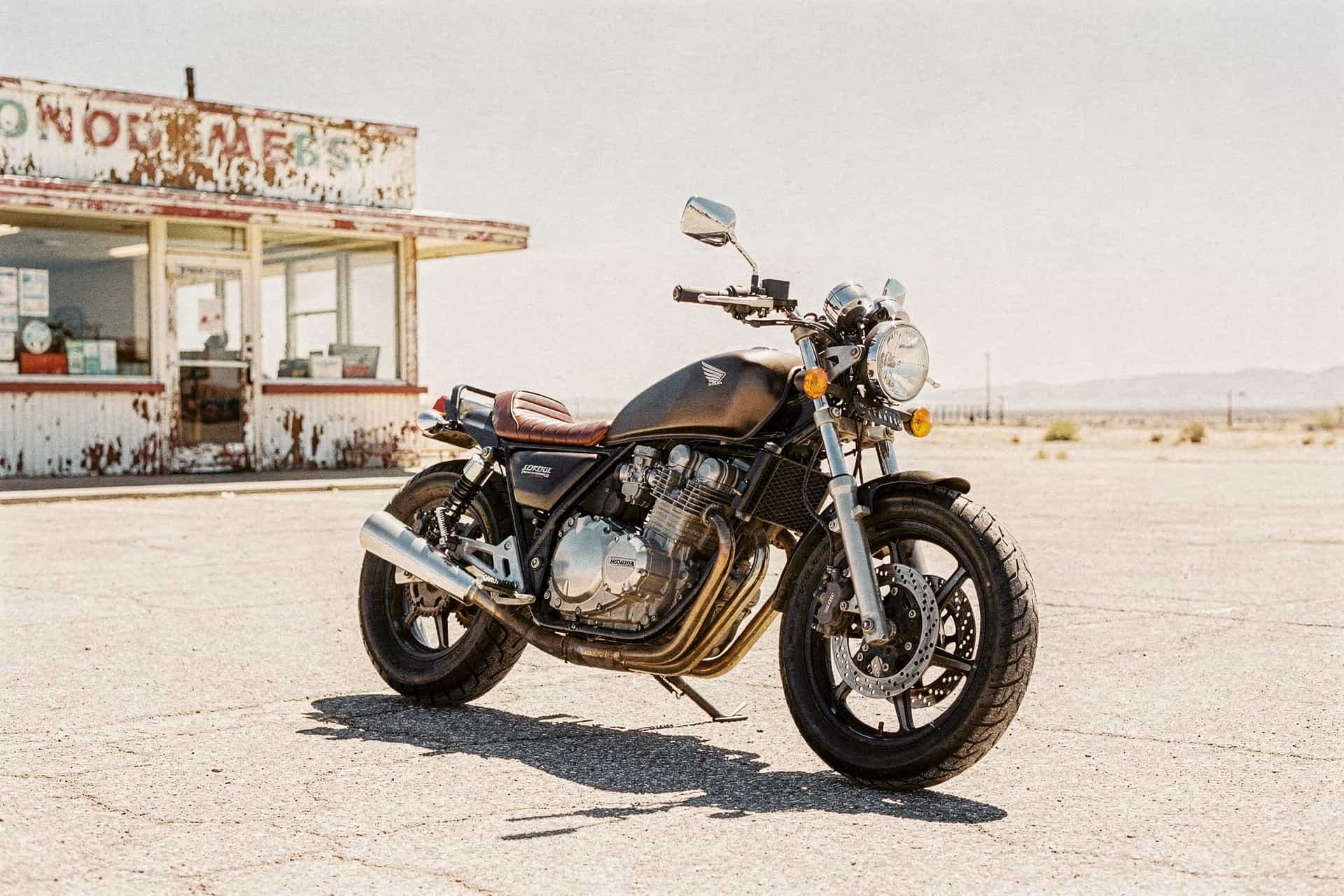
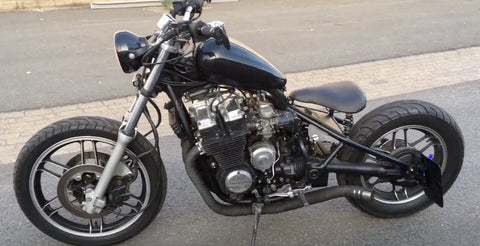
The first Nighthawk bobber we ever saw up close was a CB550SC that a buddy dragged out of a barn in pieces. Four carbs gummed shut, a seat that had turned to cardboard, and a rectangular headlight that looked like it came off a fridge. Six months later it was sitting low on a pan seat with the fenders chopped, and that little DOHC four was screaming past 9,000 rpm like it had something to prove. That’s the thing about a Honda Nighthawk bobber. The donor is cheap and the engine is tougher than it looks.
This guide covers what you need before you start cutting: which Nighthawk to buy, why the drive system matters more than the displacement, the mods that actually work, and what to check on a 40-year-old Honda before you hand over cash. If you are new to the style, start with our primer on what is a bobber motorcycle so you know what you are chasing.
1. “Nighthawk” Is a Family, Not One Bike
Honda used the Nighthawk name as a US badge on a whole run of CB models. The Nighthawk family includes the CB250, CB450SC, CB550SC, CB650SC, CB700SC, CB750SC, and the later CB750. When someone says “Nighthawk bobber,” ask which one. They build very differently.
Here is the short version of the ones you will actually find for sale:
| Model | Years | Engine | Final drive |
|---|---|---|---|
| CB250 Nighthawk | 1992-2008 | 234cc air-cooled parallel twin, about 21 hp | Chain |
| CB550SC Nighthawk | 1983-1984 | 572cc air-cooled DOHC inline four, 64 hp | Shaft |
| CB650SC Nighthawk | 1982-1985 | 627cc inline four (SOHC in 1982, DOHC from 1983) | Chain in 1982, shaft from 1983 |
| CB750SC Nighthawk | 1982-1983 | 749cc inline four, 5-speed | Chain |
| CB750 Nighthawk | 1991-2003 | 747cc air-cooled DOHC inline four, about 75 hp | Chain |
The 1980s bikes are the classic “SC” Nighthawks with the squared-off tanks, rectangular headlights, and 4-into-2 exhausts. The 1991-2003 CB750 is the plain, round-headlight standard that a lot of riders learned on. Both make good bobbers. They just ask for different kinds of work.
2. The CB550SC: Small Four, Big Attitude
The CB550SC is the one most people picture. webBikeWorld’s spec sheet lists a 572cc air-cooled DOHC four with a 9.5:1 compression ratio, 64 hp at 9,500 rpm, and 36 lb-ft of torque at 8,000 rpm. It runs a six-speed gearbox where sixth is an overdrive, and it sends power back through a shaft, not a chain. Dry weight is about 419 lbs, and it carries a 3.2-gallon tank.
Honda sold it as a 1983 and 1984 model with the same specs both years, in black or Candy Presto Red, with a chrome rectangular headlight and a 4-into-2 exhaust. Stock, it ran a 12.6-second quarter mile. That is quick for a 550 from that era, and it tells you what kind of bike you are working with: a revvy four that likes to be wrung out, not a lazy cruiser twin.
For a bobber, that engine character matters. You are not building a low-rpm thumper. You are building a small, light bike that pulls hardest near the top of the tach. Keep the gearing sharp, keep the weight off, and it rewards you.
3. The CB650SC and the Early CB750SC
The CB650SC sits in the middle. Per Wikipedia’s CB650 history, the Nighthawk 650 arrived in 1982 with a SOHC engine and chain drive. For 1983, Honda swapped in a new rubber-mounted DOHC engine with hydraulic valve-lash adjusters and switched to shaft drive. That makes the 1982 and the 1983 650 two very different donors, even though they look alike. If a seller says “82 Nighthawk,” check which engine is in it.
The 1982-1983 CB750SC is the big brother. Wikipedia’s CB750 page lists it with a 749cc engine, a 5-speed box, chain drive, a front disc and rear drum brake, and Honda’s TRAC anti-dive front end. Chain drive plus a bigger four makes the CB750SC one of the friendlier 1980s Nighthawks to bob. Honda also sold a CB700SC Nighthawk S, sized under 700cc to get around the 1983 US tariff on bigger imported bikes.
If you like the look of the early Hondas but want more to work with, our Honda CB650 bobber guide digs into the CB650 platform in detail.
4. The 1991-2003 CB750 Nighthawk: The Easy Button
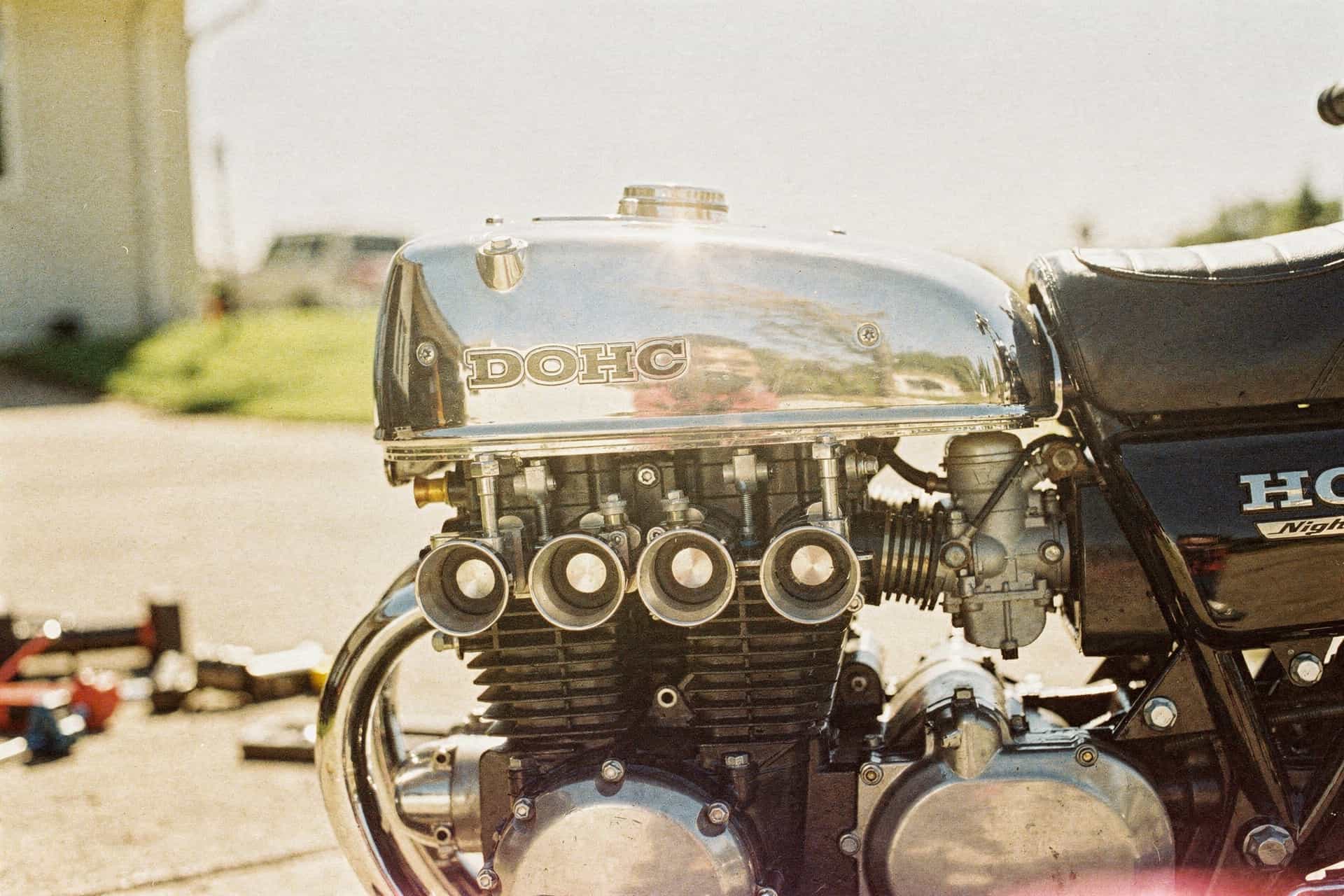
The later CB750 Nighthawk is the one we point first-time builders toward. The RC38/RC39 Nighthawk 750 ran from 1991 to 2003 with an air-cooled DOHC four making about 75 hp at 8,500 rpm and 47 lb-ft at 7,500 rpm. It weighs about 463 lbs and uses chain drive.
The big win is the hydraulic valve adjusters. No shim buckets, no fiddly valve checks every few thousand miles. Add chain drive, a simple twin-shock rear end, and a huge supply of used parts, and you have a donor that forgives a lot of mistakes. It is not rare, it is not precious, and nobody will cry if you cut the rear fender off one.
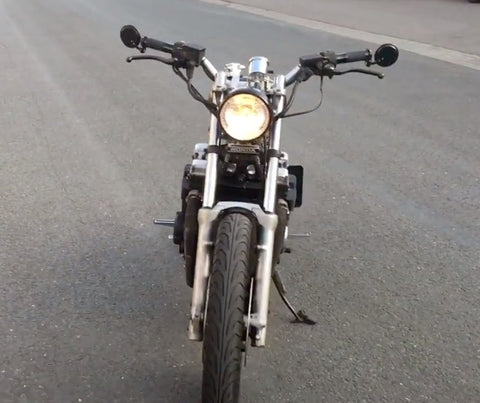
The downside is the look. Stock, it is a plain standard with a round headlight and a flat seat. You have to work harder to make it read as a bobber. That means lowering the rear, a solo seat, a trimmed fender, and bars that pull the stance down.
5. Shaft Drive vs Chain: Decide Before You Cut
This is the part most first-time builders miss. On a chain-drive bike, the swingarm is just a pivoting arm. You can cut it off and weld in a hardtail section, or bolt on shorter shocks, and the chain does not care.
On a shaft-drive Nighthawk (the 1983-84 CB550SC and the 1983-85 CB650SC), the swingarm carries the driveshaft and the final drive housing. You cannot just chop it off. A hardtail has to hold the final drive solid and in line, which means more fabrication, more measuring, and more ways to get it wrong. We’ve seen builds stall for a year right at this step.
So you have two honest options:
- Keep the swingarm, drop the shocks. Shorter shocks lower the rear and give you the bobber stance without touching the frame. You keep real suspension, the shaft stays happy, and the job takes a weekend.
- Go full hardtail. It looks right and nothing beats the line of a rigid frame. But it is a fabrication job, and on a shaft bike it is a big one. Read our breakdown of hardtail vs softail before you commit, because a rigid rear on an old Honda will find every pothole in your city.
If you want a rigid frame without the fab work, a ready-made rolling chassis is another way in. Our guide to the bobber rolling chassis covers what that route costs.
6. The Mods That Make a Nighthawk a Bobber
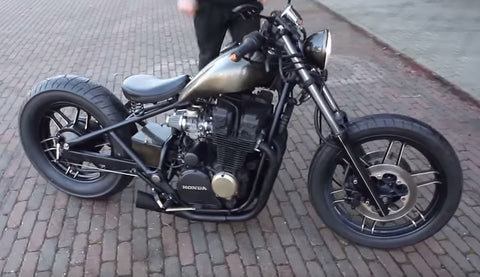
Every Nighthawk bobber we have seen that actually worked hit the same basics. Here is the list, in roughly the order you should tackle it:
- Rear end. Hardtail section or shorter shocks. This sets the stance, so do it first.
- Fenders. Chop the rear, ditch the front or trim it tight. That is where the name “bobber” came from.
- Seat. A pan seat or sprung solo seat. It drops you into the bike and cleans up the tail.
- Bars. Drag bars or low, wide bars. Pick bars that match your reach, not a photo.
- Lighting. A round headlight instead of the stock rectangle on the SC bikes, plus small LED turn signals and a compact tail light.
- Wiring. Tuck or rebuild the loom. A 40-year-old Honda harness is due anyway, and hidden wires are half the look.
- Battery. Relocate it. An ammo-can battery box or a small lithium battery frees up the space under the seat.
- Controls. New throttle cables, and forward or mid controls to suit your legs.
- Intake and exhaust. Pod filters in place of the airbox, and a shorter exhaust.
One warning on that last item. Pod filters on a four-carb Honda are not plug and play. Pull the airbox and the carbs will run lean unless you rejet and sync all four. Budget for jets and a carb sync tool, or leave the airbox alone until the rest of the bike is sorted.
Other builders go further with suicide shifters, grenade shift knobs, and custom kickstands. That’s fine for show, but a suicide shift on a six-speed street bike is a lot to manage in traffic. Build for how you actually ride.
7. What to Check Before You Buy the Donor
A Nighthawk bobber is only as good as the bike you start with. These are old Hondas, and some of them have had rough lives. Here is what we look at before money changes hands:
- Carbs. Four carbs that sat for years will be varnished. Budget for a full clean, new gaskets, and a sync. If the seller says “it just needs a carb clean,” price the bike like it needs more.
- Charging system. Old Honda stators and regulator-rectifiers are common failure points. Put a meter across the battery at idle and at 3,000 rpm before you buy.
- Valve train noise. Bikes with hydraulic lash adjusters can tick when they are low on oil or running old oil. Fresh oil often quiets it. If it does not, walk away or price it in.
- Shaft drive. On the 550 and 650 SC, check the final drive for leaks and clunks. Rock the rear wheel with the bike in gear and listen.
- Frame and forks. Look for bent tubes, cracked welds, and pitted fork tubes. Lowering and hardtailing puts more load through the frame, so start with a straight one.
- Title. Make sure the paperwork matches the frame number. Modifying a bike with a bad title is a legal headache you do not need.
For a first-timer on a budget, the CB250 Nighthawk is worth a look too. The 234cc parallel twin makes about 21 hp, the seat sits under 30 inches, and it uses a chain. It shows up a lot in basic rider courses, so used ones are cheap. Check for drop damage from training fleets, keep the build light, and treat it as a city bike.
How a Nighthawk Stacks Up Against Other Honda Donors
The Nighthawk is not the only Honda that bobs well. The Shadow is the obvious rival. It comes with a V-twin, a low seat, and a cruiser frame, so it needs less work to look like a bobber. Our Honda Shadow bobber guide covers those builds. The trade-off is character. A Shadow bobber rumbles. A Nighthawk bobber howls. If you want a bike that feels like a stripped-down street fighter from the early 1980s, the Nighthawk’s inline four is the reason to pick it.
Honda’s cruiser history explains why these bikes are everywhere. Honda built huge numbers of them in the 1980s, and our look at the Honda cruisers that ruled that era shows how the brand got there. For you, that means cheap donors, a deep used parts market, and plenty of other riders who have already solved the problems you are about to hit.
Our Honest Take
A Nighthawk bobber is not a show bike you buy. It is a bike you build in a one-car garage with a borrowed welder and a stack of manuals. It will fight you on the carbs, and if you pick a shaft-drive model, it will fight you on the rear end. But when it fires up and you roll it out low and loud, it is yours in a way no factory bike ever will be.
Pick the right donor for your skills. The CB750 Nighthawk if you want it easy, the CB550SC or CB650SC if you want the classic 1980s look and do not mind the extra work. Then strip it, sort it, and ride it.
When the bike is done, dress the part. Our t-shirt collection is built by riders who wrench on their own bikes, and the full Bobber Brothers catalog has hoodies, caps, and patches for the garage and the road.
Sources
- Honda Nighthawk 550 CB550SC - webBikeWorld - CB550SC years, 572cc DOHC engine, power, torque, six-speed, shaft drive, weight, tank, colors
- Honda Nighthawk - Wikipedia - list of CB models sold under the Nighthawk name
- Honda CB650 - Wikipedia - CB650SC Nighthawk years, 1983 switch to DOHC, hydraulic lash adjusters, and shaft drive
- Honda CB750 - Wikipedia - 1982-83 CB750SC and 1991-2003 CB750 Nighthawk specs, CB700SC tariff background
- Honda Nighthawk 250 - Wikipedia - CB250 Nighthawk years, engine, power, seat height, and rider training use