Four Years and a Bad Sense of Timing
Harley-Davidson built the Cross Bones for four model years. 2008 to 2011. Then they killed it. That decision looks worse every year.
We first saw an FLSTSB at a rally in 2009 - matte black everything, springer forks catching the light, solo seat, bobbed fender barely clearing the rear tire. A guy had ridden it in from out of state and parked it between two chrome-heavy touring rigs. Every person who walked past stopped and looked at the Cross Bones. Nobody stopped for the baggers.
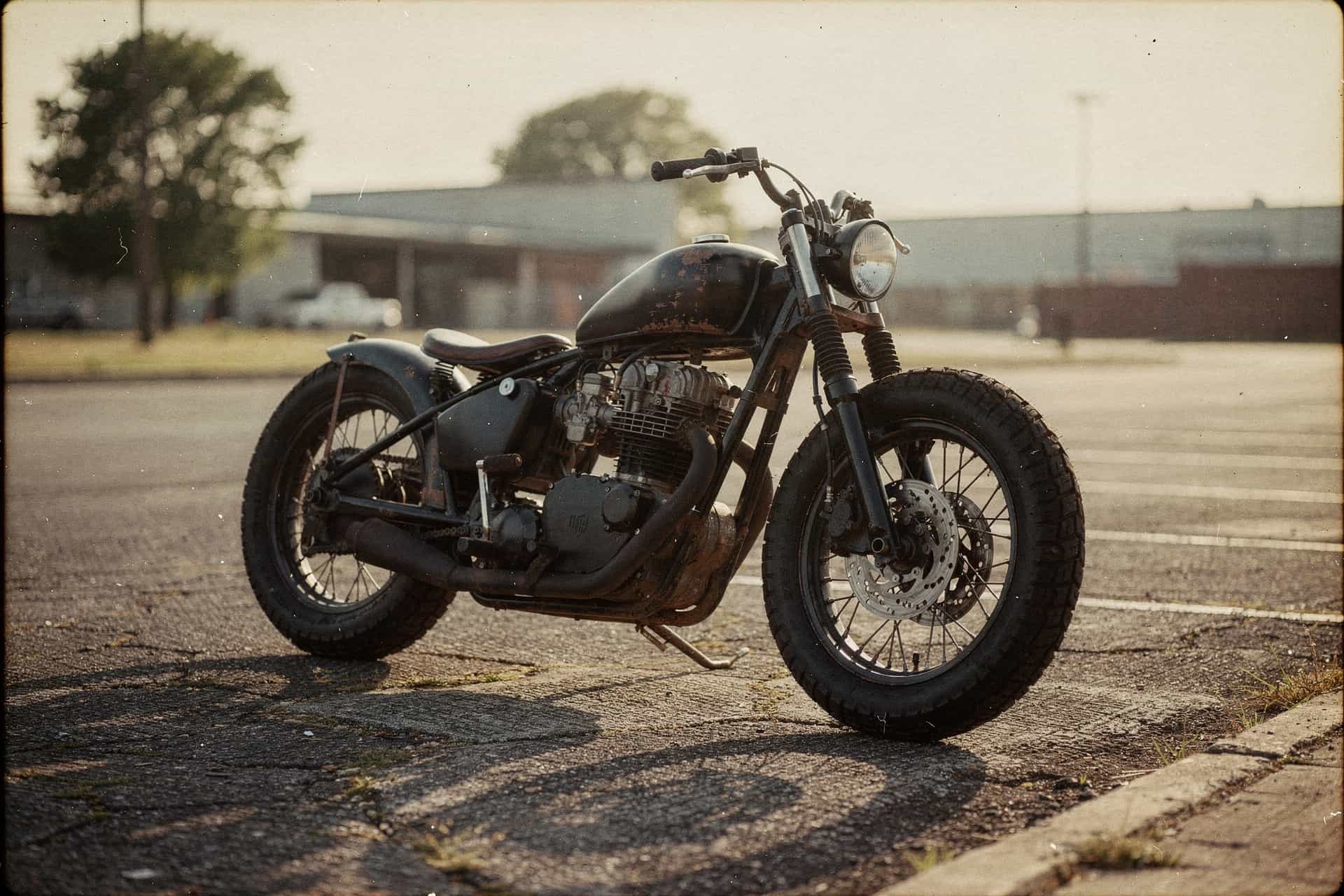
That was fifteen years ago. The Cross Bones was a factory bobber before factory bobbers became a marketing category. Triumph didn’t release the Bonneville Bobber until 2017. Indian didn’t launch the Scout Bobber until 2018. Harley’s own marketing team barely used the word “bobber” in the Cross Bones press materials. They called it a “retro custom cruiser.”
They had the right bike at the wrong time. And now clean examples sell for more than their original sticker price.
The FLSTSB: What Harley Actually Built
The Cross Bones started life on the Softail platform - Harley’s hidden rear suspension chassis designed to look like a hardtail frame. That’s the foundation. What Harley’s styling department bolted onto it turned a standard Softail into something that looked like it rolled out of a 1940s garage.
Springer Front End
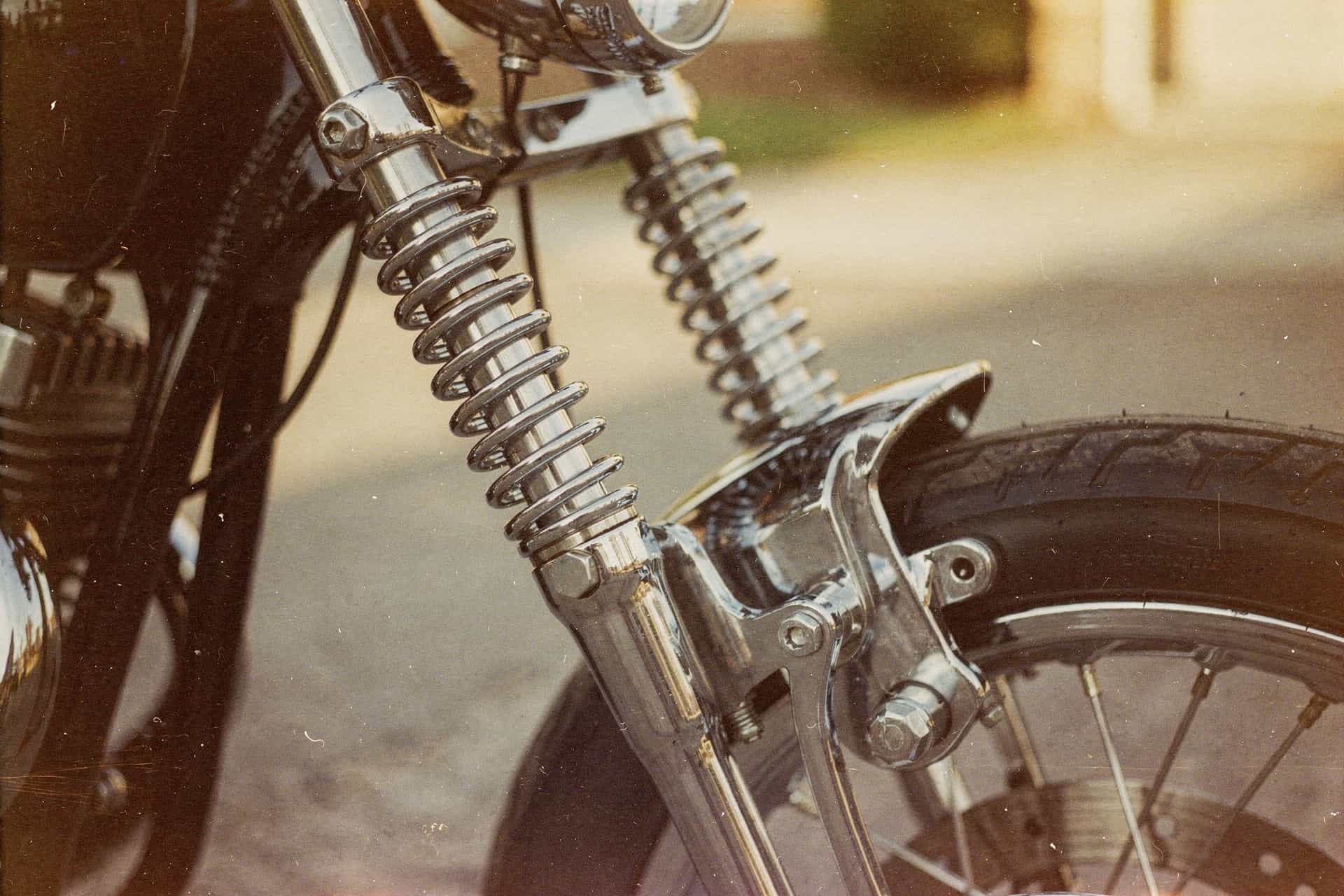
The defining feature. The Cross Bones ran a springer front end - two parallel fork legs connected by external springs and rocker arms. This design predates hydraulic telescopic forks. Before the late 1940s, this is how every motorcycle handled front suspension.
Harley had put springers on Heritage models before (the FLSTS Heritage Springer ran from 1997 to 2003), but the Cross Bones was the first time they combined a springer with a stripped-down bobber package. The visual effect is immediate - tall exposed springs, chrome rocker covers, that unmistakable vintage profile that telescopic forks can never replicate.
How does it ride? Different. Shorter travel, more direct feedback, more flex under hard braking. You feel the road through the bars in a way that telescopic forks filter out. Some riders love it instantly. Others need a hundred miles to adjust. It’s not better or worse than telescopic forks - it’s a different conversation with the pavement.
Solo Seat on a Coil Spring
True to bobber tradition, the Cross Bones shipped with a spring-mounted solo seat and no passenger accommodations. The adjustable two-position springer saddle rode on a single large coil spring that added suspension travel on top of what the Softail’s hidden rear shocks provided.
No saddlebags. No tour pack. No passenger pegs. Just the rider and the road. If you need to carry a passenger, this isn’t your bike. Never was.
Black Denim Finish
Harley wrapped the Cross Bones in “Black Denim” - a flat matte black that covered the tank, fenders, and most of the engine. In 2008, factory matte black was genuinely rebellious. Every other Harley in the showroom was either glossy Vivid Black or some kind of pearl/candy coat. The Cross Bones rejected chrome. It looked like a bike that had been built in a garage, not ordered from a dealer floor.
The engine covers, exhaust, and air cleaner all wore dark treatments. Some chrome remained on the springer forks and a few smaller details, but the overall effect was cohesive - a machine that belonged parked outside a dive bar at midnight.
Ape Hangers and Forward Controls
Stock handlebars were mini ape hangers with roughly 10 inches of rise. Not the extreme 16- or 20-inch bars you see on custom choppers, but enough to put your hands up and elbows out in that classic kicked-back stance. Combined with the forward controls, the riding position said exactly one thing: no rush.
Engine and Drivetrain
The Cross Bones ran the Twin Cam 96B - the counterbalanced version of the 96 cubic inch motor used across the Softail lineup.
- Displacement: 1,584cc (96 cubic inches)
- Configuration: 45-degree V-twin, air-cooled, pushrod OHV
- Fuel system: Electronic Sequential Port Fuel Injection (ESPFI)
- Transmission: 6-speed Cruise Drive
- Final drive: Belt
- Torque: Approximately 92 lb-ft at 3,000 RPM
- Exhaust: Staggered shorty duals
The 96ci Twin Cam wasn’t the most powerful engine Harley offered, but it was proven and torquey exactly where a bobber spends its time - low and midrange. It pulled hard from idle to about 4,500 RPM and ran out of breath above that. For backroads and city riding, which is what you actually do on a bobber, the power was more than adequate. The 96 cubic inch motor guide covers the full specs and common issues if you’re working on one.
Hidden horizontal coil-over rear shocks sat mounted below the powertrain, giving the bike that hardtail look without the hardtail punishment. The Softail trick has been fooling people at stoplights since the 1980s.
Dimensions and Weight
Here’s where the Cross Bones gets interesting for riders of all sizes.
- Seat height: 26.6 inches
- Wheelbase: 64.5 inches
- Rake: 32 degrees
- Trail: 6.3 inches
- Fuel capacity: 5.0 gallons
- Dry weight: Approximately 700 pounds (317.5 kg); in running order approximately 737 pounds (334 kg)
- Front wheel: 16-inch wire spoked
- Rear wheel: 17-inch wire spoked (200/55R17 tire)
That seat height meant both feet flat on the ground for nearly every rider, regardless of inseam. No tiptoeing. No leaning the bike to reach the pavement. Confidence at stop signs was immediate, which matters more than most people admit - especially on a 737-pound (running order) motorcycle.
The handling was standard Softail behavior. Stable at highway speed, manageable in parking lots, reasonably nimble on twisty roads for its weight. The springer added character that telescopic forks don’t have, though it required a slightly different approach to cornering inputs and trail braking.
Model Year Changes: 2008-2011
2008 - Launch Year: The original FLSTSB. Black Denim only. 5.0-gallon fuel tank. Solo seat, springer fork, bobbed rear fender, mini ape hangers. MSRP approximately $16,795.
2009: Carried over mostly unchanged. Black Denim remained the only color. Minor electronics and instrumentation updates.
2010: Optional security system added. A few new color options appeared alongside the signature Black Denim.
2011 - Final Year: Last year of production. Harley was streamlining the Softail lineup, and the Cross Bones, despite its cult following, didn’t move enough units to survive. The bike that predicted the bobber trend was discontinued right before that trend exploded.
Production estimates based on VIN sequence analysis by enthusiasts suggest roughly 2,000-3,000 units per year, with total production across all four years likely between 8,000 and 12,000 bikes. That’s a small run by Harley standards.
A Factory Bobber Before the Industry Had the Word
Here’s what makes the Cross Bones significant in Harley-Davidson history. When it launched in 2008, the motorcycle industry hadn’t decided that “bobber” was a marketable category. Custom builders in garages had been doing bobber things for decades - solo seats, chopped fenders, stripped-down aesthetics, dark finishes. But no major manufacturer was selling that package off the showroom floor with a factory warranty.
The Cross Bones did bobber things before the label existed in showrooms. Solo seat. Short fender. Dark finish. Minimalist everything. It was the factory version of what guys had been building by hand, and Harley pulled it off without making it feel like a marketing exercise.
That’s why values hold. The Cross Bones wasn’t trying to capture a trend. It was built with genuine design intent by people who understood what a stripped-down Harley should look like. The trend caught up to it five years later.
What It’s Like to Ride
We’ve swung a leg over a few Cross Bones at rallies and one extended loan from a friend who couldn’t ride for a few months after knee surgery. Here’s what stands out.
The springer transmits road surface texture directly to your hands. On smooth asphalt, the bike tracks straight and feels planted. On rough pavement, you know about every crack and expansion joint. It’s not harsh - it’s honest. The road tells you exactly what it’s doing.
At highway speed, the 96ci Twin Cam cruises at 65-70 mph without strain. The engine has enough reserve to pass without downshifting. Wind protection is zero - no fairing, no windshield, nothing between your chest and the air. That’s the deal you make with a bobber. You feel fast because you feel everything.
The exhaust note deserves mention. The staggered shorty duals produce a deep, mechanical thump at idle that sounds more vintage than modern. Not the booming bass of a bagger with slash-cut pipes - more contained and punchy. Roll the throttle on and it cracks open with a satisfying bark that fills a gas station parking lot without the theatrics.
The 5.0-gallon tank gives a range of roughly 150-170 miles. That’s not touring distance, but for the riding a Cross Bones invites - Saturday runs, canyon roads, meeting up at a biker bar - it’s enough.
What They’re Worth Today
Short production run plus cult following equals strong resale. Clean, low-mileage Cross Bones (under 10,000 miles) typically sell in the $12,000-$18,000 range depending on condition and modifications. Bone-stock examples with the original matte finish command the highest numbers.
Even rough examples hold value better than most Softails from the same era. The springer front end adds collector appeal - Harley hasn’t put a springer on a production model since the FLSTSB was discontinued.
If you’re sitting on a clean one, hold it. These bikes aren’t getting cheaper.
Building on the Cross Bones Platform
Despite collector status, some riders use the FLSTSB as a base for further customization. The bike already has the bones - the springer, the solo seat, the bobbed fender - so modifications tend to refine rather than reinvent. Common upgrades include:
- Exhaust: 2-into-1 systems from Bassani or TBR for better power and deeper tone
- Air cleaner: High-flow aftermarket intake to match exhaust upgrades
- Handlebars: Swapping stock mini apes for 12-inch or 14-inch ape hangers
- Seat: Leather spring seats from La Rosa or Rich Phillips for more character
- Lighting: LED headlight and signal conversions
- Tank lift: Small spacers to raise the tank for a more aggressive visual line
The springer front end limits some suspension modifications, but that’s the point. You don’t buy a Cross Bones and bolt on telescopic forks. That defeats the entire purpose.
For a look at what builders do when they take Softail platforms further, check out the best Harley bobber builds. And for riders who like the stripped-down factory approach but want something in current production, the Low Rider carries its own cult following into the present day.
The Bike That Got Away
Harley-Davidson has a long history of building interesting machines and killing them before the world catches up. The XLCR Cafe Racer. The Buell lineup. The VR1000. The Cross Bones fits that pattern - too weird for the mainstream when it launched, too cool to forget once it was gone.
Four years. Springer forks. Matte black. Solo seat. Approximately 10,000 total units. And they are not making more.
If you see one for sale in good shape with reasonable miles and the original finish, don’t overthink it. The riders who own them aren’t eager to let go. We understand why. We ride the same roads and build for the same reasons.
Check out our full collection of gear built for riders who understand that sometimes the best bikes are the ones that almost didn’t happen.
Sources
- Harley-Davidson Cross Bones (2008-2012) Review - MCN - full road test and specifications
- 2008 FLSTSB Cross Bones Specifications - JD Power - complete factory specifications and dimensions
- Cross Bones FLSTSB Detailed Specs and Background - Viking Bags - detailed specifications including seat height, weight, and drivetrain
- 2008 FLSTSB Cross Bones Parts Catalog - Harley-Davidson Service Info - official Harley-Davidson parts catalog for 2008 Softail models
- New Harley Cross Bones Revealed - MCN - original launch coverage and MSRP details