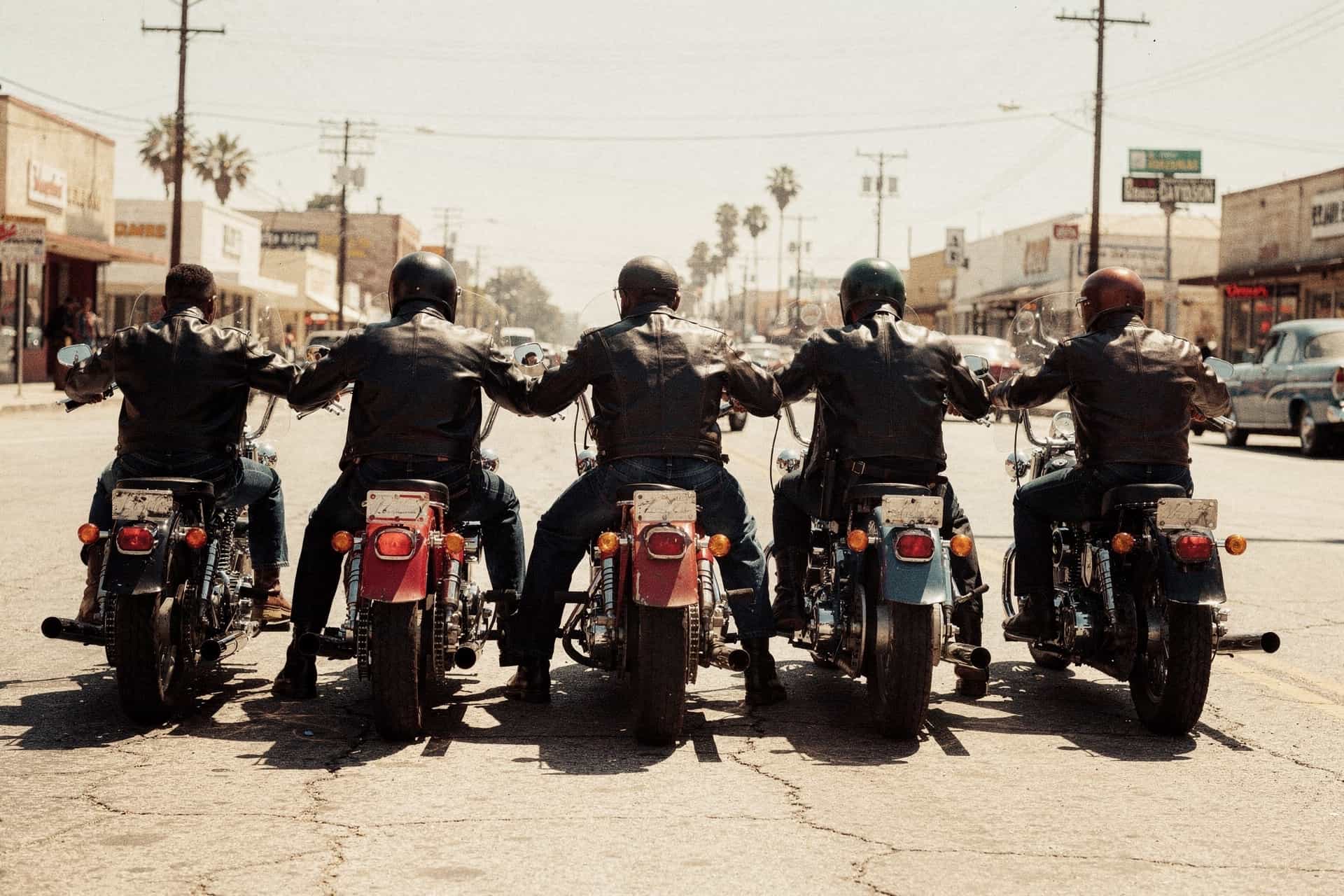
South Central Los Angeles, around 1959. Five or six men who went to school together, now riding full-dress and chopped Harleys, sitting around deciding what to call themselves. Two names on the table: The Patriots Of Iron & Steel, and Chosen Few. They took the second one, from the line about many being called and few being chosen, and a club that is still running sixty-odd years later got its name.
| Field | Documented detail |
|---|---|
| Founded | Around 1959, Los Angeles, per the club’s own published history |
| Founding members | Lionel, Lil Frank, Roger, Hawk, Slim, Shirly Bates, Champ |
| Name considered and rejected | The Patriots Of Iron & Steel |
| Integration | First white member, “White Boy Art”, around 1960, followed by “White Boy Tom” |
| Motto and diamond | Take None Give None, credited by the club to a member known as 69 Jim |
| Also known as | 36, from C and F being the third and sixth letters |
| Documented presence | Chapters across roughly two dozen US states plus the Philippines |
| Period coverage | Featured in Ebony magazine, December 1966 |
We are not a motorcycle club. Bobber Brothers is a brand built by riders who respect the culture and the history, and what follows is the documented history of the Chosen Few MC with its sources named. For the wider structure of how clubs work, our motorcycle clubs complete guide is the cluster reference.
Los Angeles in the Late 1950s
To understand why the Chosen Few formed, you have to understand what organized riding looked like for Black men in late-1950s America.
The American Motorcyclist Association and the broader sanctioned riding world were white spaces. The outlaw clubs were white organizations too: the Hells Angels formed in 1948, the Outlaws trace to 1935. The industry marketed to white buyers. Rallies, runs, and events catered to white crowds.
Black riders existed in numbers and always had. What did not exist was infrastructure built for them. So they built it. Los Angeles and Oakland were the centre of an emerging Black biker scene at the end of the 1950s, and the same decade produced the Choppers in LA, the East Bay Dragons in Oakland, and the Frisco Rattlers, Outlaw Vagabonds, and Defiant Ones around the Bay.
The Chosen Few’s founders came out of working-class LA neighbourhoods. They worked during the week and rode on weekends. They rode Harleys, full-dress and chopped, because that is what you rode if you were serious. The culture demanded American iron then and it still does in most traditional MC settings.
Integration Started in 1960, and It Was Not Smooth
The part of this club’s history that gets flattened into a nice sentence is the part worth slowing down for.
Per the club’s own account, a rider they called White Boy Art came around in 1960, roughly a year after the founding, and was patched. White Boy Tom followed. That makes the Chosen Few, by their own description, the first fully integrated outlaw motorcycle club in the United States.
What the polite version leaves out is what happened next. White clubs in Southern California knew the Chosen Few as a Black club. When white riders started flying that patch, those clubs had a problem with it, and the Chosen Few’s white members took racial abuse from other white riders for wearing the colors. They kept wearing them. The line the club uses about that period, “In Black & White We Really Had Might,” is not a slogan somebody workshopped. It is what came out of that.
Over the following decades the composition kept moving. The club describes chapters that were all Black, all white, half white and Mexican, half Black and half white, all Mexican, half Mexican and Indian, with Asian members and one Iranian member. That is a considerably messier and more interesting picture than “the club later opened to all races.”
Honest caveat on all of it: firsts in MC history almost never rest on paperwork. Clubs date their own founding, name their own founders, and claim their own precedence. What is well supported here is that the Chosen Few were integrating at the very start of the 1960s, decades before most of the MC world, and that they have said so consistently in their own materials since.
The Patch and the Motto
The first patch was black and white before it went to red and white: an oval field of red with white crossed human bones in the centre and “Chosen Few” arched across the top. The design has been described elsewhere with the crossed bones held by chains and pulled by two riders.
The Take None Give None diamond is the piece riders recognise. The club credits it to a member remembered as 69 Jim, a Mexican rider, and it has outlasted every other change to the club’s colors. Take None Give None is a posture, not a threat: nothing asked of other clubs, nothing owed to them.
The club also answers to 36, from C and F being the third and sixth letters of the alphabet. Number and letter shorthand like this is common inside clubs and almost never means what internet glossaries claim it means, which is why our guide to biker patches and how to read a cut keeps the sourced material separate from the folklore. For the emblems that do have a documented paper trail, see outlaw MC patch meanings.
One Percenter Status
The Chosen Few identify as a one-percenter club, which means they operate outside AMA sanctioning and answer to their own bylaws. The 1%er designation carries specific weight in the MC world and it is issued by a club to its own members, never bought.
They have carried that identity since the founding era, which puts them in the first generation of clubs to do so and makes their integration timeline more striking, not less. The 1%er world of 1960 was not a place where a Black club patching a white member was uncontroversial, and it was not a place where a white club’s opinion could be safely ignored either.
Structure and How They Operate
The Chosen Few follow the traditional MC model.
Three-piece patch. Top rocker with the club name, center patch with the club insignia, bottom rocker with the chapter location. Wearing it means you prospected, you earned it, and the club trusted you with its name on your back.
Officers. President, vice president, secretary, treasurer, sergeant-at-arms, road captain. The hierarchy virtually every structured MC uses, traceable to military organization, which makes sense given how many club founders were veterans.
Prospecting. A probationary period that tests commitment before a rider gets the full patch. The prospect period is a filter and it is supposed to be. Not everyone makes it through.
Church. Regular mandatory chapter meetings where club business gets handled. The discipline that keeps a club alive for sixty-plus years does not happen by accident.
American iron. Members ride American-made motorcycles. Harleys dominate, as they do in every traditional MC. That requirement goes back to the post-war roots of the whole outlaw club movement.
Chapters Across the Country
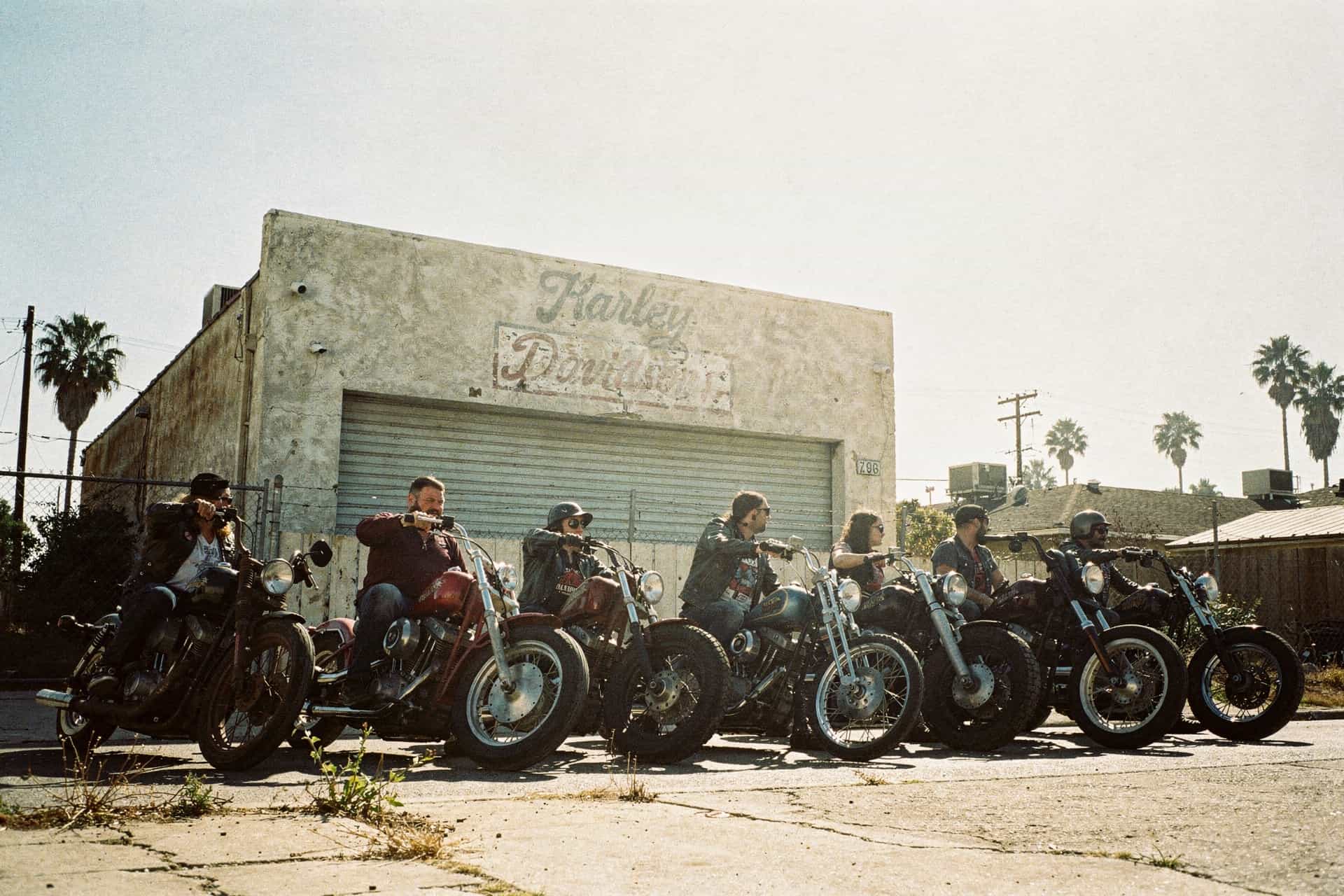
From Los Angeles the club expanded across roughly two dozen states over the decades, with chapters documented in California, Nevada, Arizona, Washington, Oregon, Idaho, Montana, Nebraska, Colorado, Texas, Oklahoma, Hawaii, Illinois, Florida, Georgia, Alabama, Louisiana, New York, Tennessee, Virginia, Kansas, Minnesota, Missouri, and North Carolina, plus a presence in the Philippines.
The growth was deliberate rather than fast. In the MC world, clubs that expand quickly tend to fracture: chapters without genuine local roots and local leadership collapse or create problems for the national organization. The Chosen Few grew chapter by chapter through riders who sought the club out. Sixty-plus years of continuous operation is the argument for that approach.
No, This Is Not the Chicago Picnic
This one needs correcting because the confusion is everywhere, including in earlier versions of this page.
There is a very large annual event in Chicago called the Chosen Few Picnic. It has nothing to do with this motorcycle club. It is run by the Chosen Few DJs, a South Side house music collective founded by Wayne Williams in 1977, and it started in 1990 as a reunion barbecue behind the Museum of Science and Industry. It has been held in Jackson Park since 2008, has been ticketed since 2010, and draws crowds in the tens of thousands to what is billed as the longest-running house music event in the world.
Two different Chosen Fews, one name. And they are not the only two. Wikipedia’s entry notes unrelated motorcycle clubs using the Chosen Few name in Iowa, New York, and Texas among other places. If you are researching a club, the state and the patch matter more than the name.
Black Motorcycle Culture as a Parallel Tradition
The Chosen Few sit inside a larger tradition of Black motorcycle clubs stretching back to the 1950s. The East Bay Dragons in Oakland, the Soul Brothers, the Wheels of Soul, the Outcasts MC out of Detroit, and dozens more built histories that run alongside the white-dominated MC world and largely separate from it.
They formed for the same reason: exclusion. When the mainstream riding world would not have Black riders, Black riders built their own clubs, their own events, and their own culture, with protocols that both mirror and diverge from the broader MC landscape.
Where the Chosen Few break the pattern is that they did not stay separate. They integrated in the opposite direction from everybody else, and they took the friction that came with it.
The Bikes
Walk any Chosen Few event and you see a cross-section of American motorcycle culture.
Harleys dominate. Baggers are heavily represented, many custom-painted well past anything a factory designer would sign off on. Custom choppers, old-school Softails, Dynas on ape hangers, and the occasional Sportster somebody sank more into than the bike cost new. Indians have gained ground in recent years.
What you will not see much of is metric iron. The American-made standard holds. A bone-stock Road King ridden 20,000 miles a year still commands more respect than a show bike that never leaves the trailer. Miles matter more than money, and that has been true since 1959.
What Was Filmed, and What Was Lost
Photographer Gusmano Cesaretti, who had a long relationship with the club, and Kurt Mangum spent roughly 2010 to 2012 filming the Chosen Few for a documentary project titled after the motto, Take None Give None. Period coverage of the project describes what they walked into: tension between founding-generation members and younger ones, and the LAPD raiding and seizing the club’s historic South Central clubhouse during the filming.
That last detail is the one that lands. A club can survive sixty years of internal politics and outside pressure and still lose the room where it started. What kept going was the patch and the people wearing it.
For riders drawn to how clubs build bonds through small rituals rather than institutions, the guardian bell tradition is a good companion read, and the Iron Horsemen MC in Cincinnati shows a different club holding one city for a comparable stretch.
What They Proved
A club started by seven men in Los Angeles around 1959, still running, with chapters across two dozen states and in the Philippines, has demonstrated something no amount of coverage can manufacture. They showed up, they kept showing up, and they did it while integrating a corner of American life that was not asking to be integrated.
If you ride and want to carry the culture on the road without borrowing anybody’s colors, our patches and merch and riding tees are original Bobber Brothers artwork. We are not an MC and none of our designs copy club insignia.
Sources
- Chosen Few MC - History - the club’s own published account of the founding, the founding members, the rejected name, the original patch, the first white members around 1960, and the Take None Give None diamond
- Chosen Few Motorcycle Club - Wikipedia - founding date, state-by-state chapter list, the December 1966 Ebony magazine citation, and the note that unrelated clubs share the name in other states
- Take None Give None: The Story of the Legendary Chosen Few MC - Dust Factory Vintage - 2013 coverage of the Cesaretti and Mangum documentary project, the 2010 to 2012 filming period, generational tension inside the club, and the LAPD seizure of the South Central clubhouse
- An Oral History of the Chosen Few Picnic - Chicago Reader - the Chicago event’s origin with the Chosen Few DJs in 1977, the 1990 first picnic, and the move to Jackson Park, establishing that it is unrelated to the motorcycle club
- East Bay Dragons: Oakland’s Oldest Black Motorcycle Club - ABC7 San Francisco - context on the parallel Black MC founding era in California
- Black Biker History: Choppers and Motorcycle Clubs - Lowbrow Customs - overview of Black motorcycle club history including the Chosen Few and the wider late-1950s scene