


A Piece of Pewter Smaller Than Your Thumb Changed How We Ride
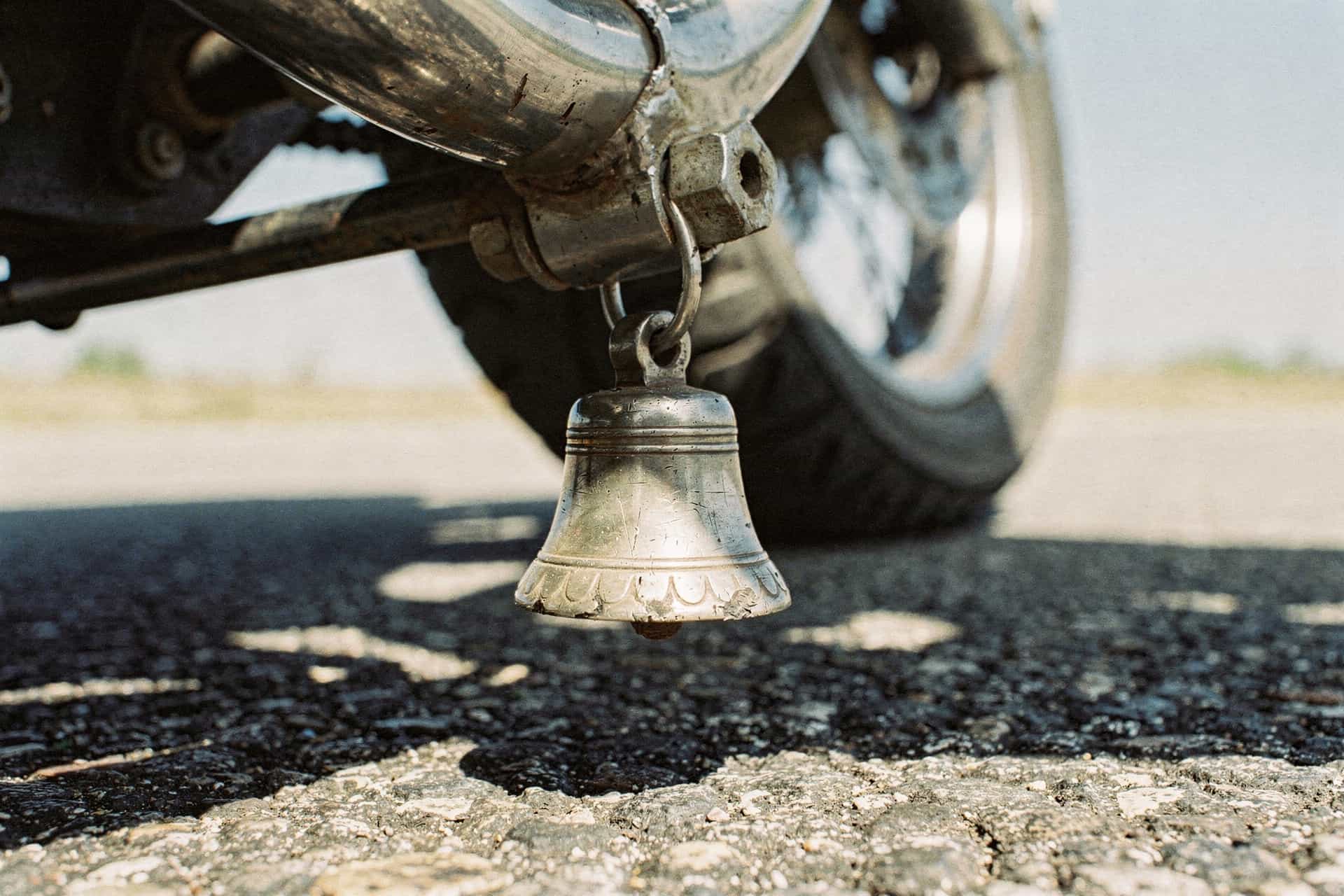
We keep a shop bike at our place in Germany. Nothing special - a beat-up bobber that has seen better decades. Underneath the frame, zip-tied to the lowest tube near the front wheel, there is a tiny pewter bell about 25 millimeters long. Scratched. Tarnished. You would miss it unless you crawled under the bike on your hands and knees.
A rider we used to cruise with clipped it on before a long weekend through the mountains. No ceremony. He pulled it from his vest, looped a zip tie through the eyelet, cinched it tight to the down tube, and said, “Now you are covered.” We did not ask what it meant. We knew.
That bell has survived three sets of tires and a rear-end rebuild. We are not superstitious people. But that bell stays.
If you ride, you have seen these. Small bells - usually pewter, sometimes brass or stainless steel - no bigger than a thimble, hanging from the underside of motorcycle frames across the world. They go by several names: guardian bell, gremlin bell, spirit bell, ride bell. The tradition behind them is one of the oldest in biker culture, and it runs deeper than most people realize.
Road Gremlins: The Legend Every Rider Knows
The story goes like this.
Evil spirits called road gremlins live on every highway and back road. They are responsible for every piece of bad luck a rider encounters. The pothole that appears out of nowhere. The oil slick on a blind corner. The electrical gremlin that kills your headlight at dusk. The deer that steps into the road at exactly the wrong second.
These gremlins attach themselves to motorcycles. They grab onto the frame, the exhaust, the wiring harness. Once they latch on, they start small - a loose bolt, a misfiring cylinder. Left unchecked, they work toward something worse.
The guardian bell catches them. The constant ringing as the motorcycle moves drives gremlins insane. They cannot stand the sound. They lose their grip and fall to the road. Some riders say that is why you see potholes and rough patches in clusters - that is where the gremlins landed after the bell shook them free.
True? Of course not. It is a legend. But legends survive because they carry something real inside them. This one carries something riders understand in their bones: the road is unpredictable, bad things happen without warning, and sometimes a small gesture of protection from someone who gives a damn about you is the most powerful thing you can carry.
Where the Tradition Actually Comes From
The origin of the guardian bell tradition is murky, which is fitting for something that lives in the oral culture of riders rather than in textbooks.
The most repeated origin story involves a lone rider on a desolate stretch of road at night. Gremlins attacked his bike. Tires went flat. The engine died. He crashed. As he lay on the ground with gremlins closing in, a group of riders appeared from nowhere, fought them off, and helped him up. Before they left, one handed him a small bell and told him to attach it to his motorcycle. The bell would trap the gremlins and protect him going forward. That rider passed a bell to the next person who needed one. And the tradition spread.
There is no documented first instance. The tradition appears to have grown organically within American biker culture sometime in the mid-to-late 20th century, gaining real momentum through the 1980s and 1990s as it spread through rallies, club gatherings, and word of mouth.
The deeper roots may go back further than motorcycles. During World War II, British and American pilots attached small bells to their aircraft to ward off “gremlins” - folklore creatures blamed for unexplained mechanical failures in the air. When veterans returned home and got on motorcycles in the 1950s and 1960s, some brought the bell tradition with them. The jump from cockpit to handlebar is not hard to trace. Both involve machines that can kill you if something goes wrong, and both attracted men who understood that mechanical failure at the wrong moment is not a metaphor - it is a death sentence.
Some researchers also point to older European folk traditions involving bells as protection against evil spirits. Church bells, livestock bells, sleigh bells - all served protective or warding purposes in various cultures for centuries. The motorcycle version adapted that ancient concept to the open road. The tradition has always been strongest among Harley-Davidson and Indian riders, but it has crossed every brand and border at this point.
The One Rule That Matters: It Must Be Given
This is the part that separates the guardian bell from every other accessory you can bolt to a motorcycle.
A guardian bell only works if someone else gives it to you. You cannot buy one for yourself and expect it to carry any power. The magic - if you want to call it that - comes from the intent behind the gift. Someone who cares about your safety, who wants you to come home in one piece, buys the bell and hands it to you. Their concern, their good wishes, their love is what charges the bell with its protection.
You can buy a bell as a gift for another rider. That is the entire point. But walking into a shop and grabbing one for your own bike? According to the tradition, it is just a bell. Nice decoration, maybe. Nothing more.
We have heard riders debate this around campfires and in parking lots at Sturgis for years. Some say the rule is absolute. Others say buying one for yourself still works, just not as well. A few old-timers we have met insist the bell actually attracts gremlins if you buy it for yourself - making your luck worse, not better.
The strictest version says the bell carries the power of the person who gives it. A bell from your riding partner of twenty years carries more weight than one from a stranger. A bell from your kid or your spouse carries more than one from a drinking buddy. The closer the bond, the stronger the protection.
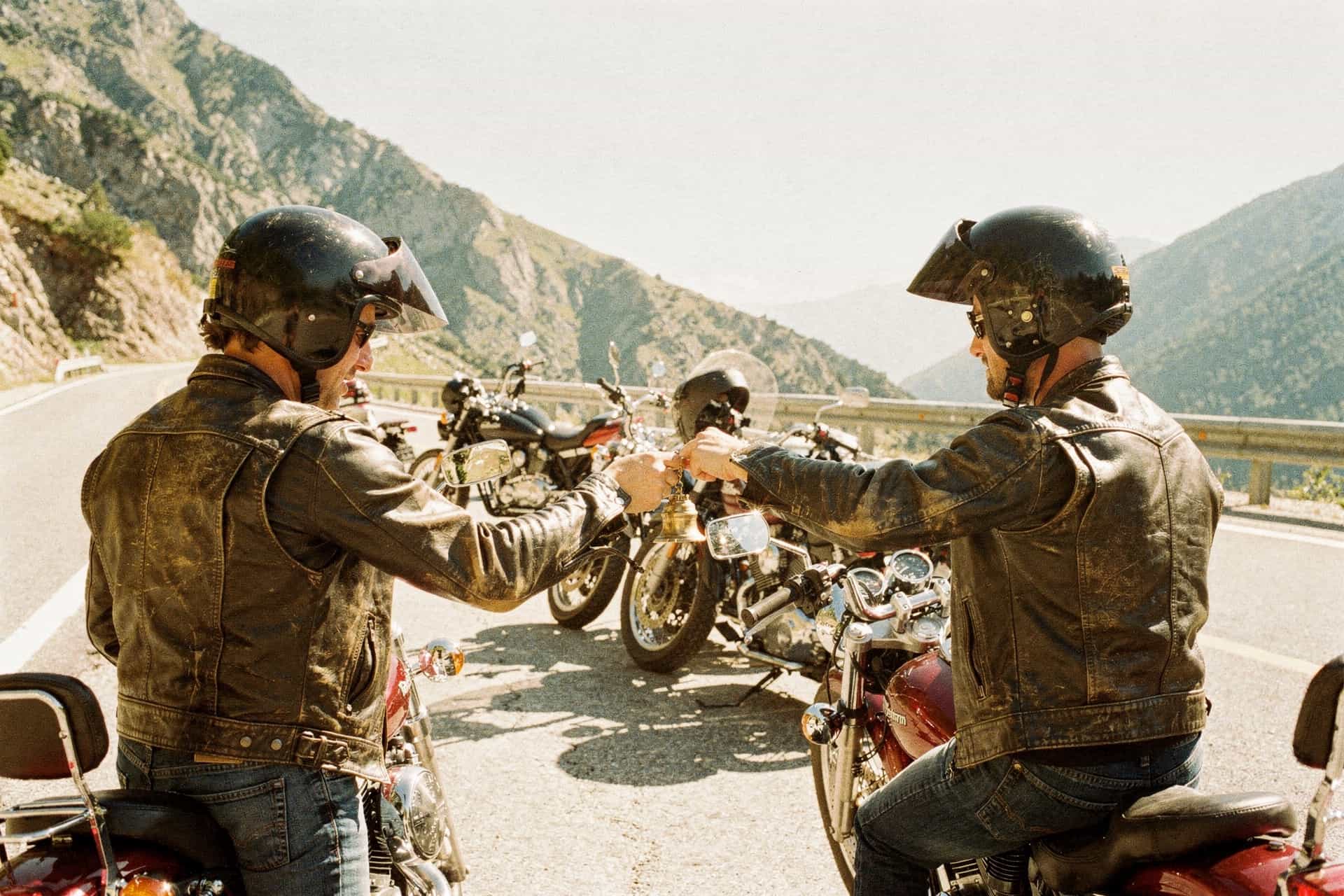
This is why you see riders at rallies buying guardian bells by the handful - not for themselves but for friends, brothers, sisters, new riders in their crew, or someone about to take a long trip. It is one of the most sincere gestures in the culture. No speech required. Just hand over the bell and say, “Hang this on your bike.”
Where to Mount a Guardian Bell
Placement matters. The bell goes at the lowest point of the motorcycle frame - as close to the road as possible without dragging.
The logic is simple within the legend. Gremlins come from the road. They climb up from the pavement. The bell needs to be where they first make contact, catching them before they work their way up to the engine, the brakes, or the electrical system.
Common mounting points:
- The bottom of the frame’s down tube - the most traditional spot and where most riders hang theirs
- Near the bottom of the engine guard or crash bar - if the bike has one
- On or near the swingarm - lower and more exposed to road vibration
- Below the frame near the kickstand mount - another natural low point
Most riders attach the bell with a small zip tie, a piece of wire, or a split ring through a mounting hole. Some use leather cord. The method does not matter as long as the bell is secure enough to stay put but loose enough to ring freely. A silent bell is a useless bell.
Do not mount the bell high - on the handlebars, the triple tree, or the sissy bar. That defeats the purpose. The bell needs to be low, where the gremlins are.
One more thing: if you pack the bell with foam or wrap it in tape to kill the sound, you have just neutralized your own protection. The ringing is the whole point.
What Happens When You Sell the Bike
This is where the tradition gets specific, and where a lot of newer riders get it wrong.
When you sell a motorcycle that has a guardian bell on it, the bell comes off. It does not transfer with the bike. The bell was given to you, not to the machine. It carries your protection - the good wishes placed on you by whoever gifted it.
Two options when the bike leaves your garage:
Remove and keep it. Transfer the bell to your next motorcycle. The protection follows you, not the frame. This is what most riders do.
Remove and re-gift it. If you want the new owner protected, hand the bell to them separately as a gift. This is a new gift - it carries your good wishes now, not the original giver’s. The act of giving recharges the bell with fresh intent.
What you should never do is leave the bell on the bike and let it go to a stranger without acknowledgment. The tradition holds that an abandoned bell loses its power. Some riders believe it inverts - attracting gremlins instead of repelling them.
Is anyone keeping strict track? No. But the tradition reinforces something important: these gestures between riders are personal. They are about the connection between people, not the hardware.
When to Give a Guardian Bell
There is no formal ceremony. No required occasion. But certain moments tend to prompt the gesture.
A new bike. When someone picks up a new or new-to-them motorcycle, a guardian bell from a friend or family member is one of the most common gifts. The rider’s equivalent of a housewarming present.
A first bike. Parents, older siblings, and mentors give guardian bells to new riders getting their first motorcycle. The message is clear: “Be careful out there. This bell watches when I can’t.”
Before a long trip. Cross-country rides, charity runs, pilgrimages to Sturgis or Daytona - all occasions where a bell might appear. We have seen riders clip bells onto each other’s bikes in gas station parking lots five minutes before rolling out.
After a close call. A rider who survived a crash, a near-miss, or a breakdown on the road sometimes receives a bell afterward. It says what nobody wants to say out loud: “That was too close.”
In memory. Guardian bells given in honor of a fallen rider carry the heaviest weight. The bell keeps the dead rider’s spirit riding alongside you. These bells tend to be the ones that never come off, no matter how many bikes you go through.
No reason at all. Some of the best bells come with no occasion. A buddy walks up, hands you a bell, says nothing more than, “Here.” That is enough.
Variations Worth Knowing
The guardian bell is the most widespread bell tradition in biker culture, but it is not the only one.
Bell blessings. Some riders, particularly those with spiritual leanings, have their guardian bells blessed by a priest, pastor, or chaplain before giving them. Motorcycle ministry groups perform bell blessings at rallies and events. This adds a spiritual layer on top of the gremlin legend.
Memorial bell runs. Charity rides sometimes incorporate guardian bells into the event. Riders buy bells, have them engraved with a fallen rider’s name, and distribute them to participants. Part fundraiser, part tribute.
Bell trees and bell walls. Some motorcycle shops, bars, and rally grounds have a spot where riders hang guardian bells in memory of people they have lost. These informal memorials accumulate over years and become powerful, quiet tributes to the community’s dead. If you have ever stood in front of one, you know exactly what we mean.
International spread. The tradition started in the United States but has gone worldwide. Australian, European, and Japanese riders all have their own versions. Riders we have met from Germany, the UK, and Scandinavia all knew the tradition, even if their local details varied slightly. The gremlin legend is the most widely told version everywhere.
The Gremlins Are Real (Sort Of)
Nobody believes tiny creatures are climbing up their motorcycle frame. But every rider knows what a road gremlin is because they have met one.
A road gremlin is the rock that kicks up and cracks your headlight on a dark highway. It is the driver who does not check their mirror before merging into your lane. It is the rain that starts three miles from home when the forecast said clear. It is the fuel line that cracks, the battery that dies, the tire that picks up a nail in the middle of nowhere.
The road is full of things trying to hurt you. Every rider knows this on a level that non-riders cannot understand. You accept the risk every time you throw a leg over the seat. But accepting risk does not mean ignoring it. The guardian bell is a rider’s way of acknowledging that the road has teeth - and asking for a little help from the people who ride it with you.
That is why the tradition endures. Not because riders are superstitious. Because riders are honest about what the road can do, and humble enough to accept protection when it is offered.
More Than a Bell
Hang it low. Let it ring. And if someone gives you one, understand what they are really saying: ride safe. We will see you down the road.
The guardian bell sits at the intersection of motorcycle folklore and genuine brotherhood, which is one of the things that makes biker culture different from any other subculture on the planet. The traditions are not corporate. They are not manufactured by a marketing department. They grow out of real experience on real roads, passed from one rider to the next across decades.
The getback whip is another tradition with deep MC roots and its own layered meanings. The Chosen Few MC in Los Angeles shows how these customs carry across different riding communities and generations. And the 1%er diamond and the Boozefighters MC take you back to two of the deepest roots in American riding history.
If you are looking for a gift for a rider in your life, few things land as well as a guardian bell paired with something they will actually wear on the road. Our patches and merch and riding tees are designed in our shop by riders, for riders - every piece built to carry the culture forward.
Sources
- The Tale of the Guardian Bell: History of Guardian Bells - Renegade Classics overview of the bell tradition and origin legends
- Guardian Bell on Motorcycles for Luck: Meaning, History, Story, Rules - Viking Bags guide to bell placement, gifting rules, and tradition
- Why Motorcycles Have Bells: The History, The Legends - Motorcycle Habit breakdown of the gremlin legend and bell customs
- Mischief in the Machine: The History of the Gremlin - Royal Aviation Museum of Western Canada on WWII gremlin folklore origins
- Gremlins: A Pilot’s Worst Nightmare - HistoryNet coverage of the RAF gremlin mythology and its cultural spread
For the broader motorcycle culture - rallies, films, music, and the lifestyle that surrounds riding - see our motorcycle culture guide.