

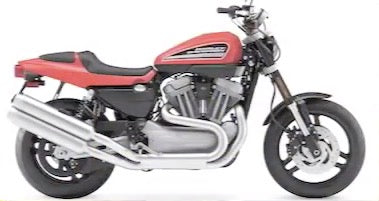
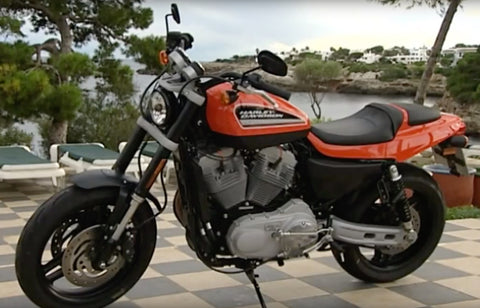
Pull up next to an XR1200 at a light and the first thing you notice is what is missing. No chrome tank badge the size of a dinner plate, no forward controls, no pullback bars. Instead you get a tall seat, mid-mount pegs, a stacked dirt-track style exhaust, and a fat 180 rear tire on a 17 inch wheel. It looks like somebody at Harley got tired of hearing that the Motor Company could not build a bike that turns.
That is more or less what happened. The XR1200 was built for Europe first, where riders wanted a Harley they could ride hard on mountain roads. It came to the US for 2009, grew into the XR1200X for 2011, and was gone from American showrooms after 2012. Today it has a cult following, and clean ones are getting harder to find.
This guide covers what the XR1200 and XR1200X are, the real numbers, what the road tests loved and hated, and what to check before you buy one used.
XR1200 and XR1200X at a Glance
- Model years: 2008 in Europe, Africa and the Middle East. 2009 to 2012 in the US. The XR1200X replaced the XR1200 in the US for 2011.
- Engine: air-cooled 1,202cc Evolution V-twin, fuel injected, 10.0:1 compression
- Claimed output: 90 hp at 7,000 rpm and 73.8 lb-ft at 3,700 rpm at the 2008 launch. Harley’s 2012 XR1200X sheet lists 73.9 lb-ft at 4,000 rpm.
- Measured output: about 81 hp and 70.4 lb-ft at the rear wheel
- Weight: 573 lb wet (XR1200X claim), 580 lb wet (tested 2009 XR1200)
- Seat height: 29.2 in laden
- Tank: 3.5 gallons
- US price new: $10,799 (2009 XR1200), $11,799 (2011 XR1200X)
Where the XR1200 Came From
Harley’s dirt-track history runs through one bike: the XR-750. Wikipedia’s XR-750 entry calls it the machine that won more races than any other in AMA history, and it is the bike Evel Knievel jumped. Harley has tried to sell that image on the street twice. The first try was the XR-1000 of 1983 and 1984, which used real XR-750 heads, cost nearly twice as much as a base Sportster, and flopped.
The XR1200 was the second try. It shares far less hardware with the XR-750 than the XR-1000 did. It is a Sportster at heart, with XR styling and a lot of chassis work. But it sold better, and it was a genuinely different motorcycle from anything else in the lineup.
Motorcycle.com’s 2008 launch review rode it at the European launch in Valencia, Spain, and was clear about the goal: Harley’s closest attempt yet at a real sport bike. North America was not part of the plan at first. Wikipedia’s Sportster article records that the XR1200 went on sale in Europe, Africa and the Middle East for 2008, then reached the US for 2009. The first 750 US bikes were pre-ordered and came with a number 1 front plate signed by pro dirt-track racers.
If you want the whole family tree, from the 1957 XL to the last air-cooled bike in 2022, our Sportster history and buyer’s guide lays it out. The XR1200 sits right in the middle of the rubber-mount, fuel-injected era.
What Harley Changed Compared to a Regular Sportster
The XR1200 is not just a 1200 Sportster with new paint. Rider Magazine’s 2009 road test lists the engine changes:
- Compression went to 10.0:1, up from 9.7:1 on the other 1200s.
- Performance cams gave the top end a push.
- Induction switched to a single 50mm downdraft throttle body instead of the usual side-feed setup, with the air filter laid flat under the fuel tank.
- Cooling got an oil cooler on the left side and oil-cooled cylinder heads. That is where the old “precision-cooled heads” talk comes from. The engine is still air-cooled, it just runs oil through the heads to carry heat away.
- Exhaust is a 2-into-1-into-2 system, borrowed in spirit from the dirt tracks.
The Evolution engine underneath is the same basic 1,202cc motor Harley used across the Sportster line, with an 88.9mm bore and a 96.8mm stroke. So parts support, service knowledge and the aftermarket are all still there, which matters a lot on a bike that has been out of production for more than a decade.
The chassis got the bigger changes. The XR runs a 43mm Showa fork, dual Showa shocks on an aluminum swingarm, twin 292mm front discs with Nissin four-piston calipers, and an 18 inch front and 17 inch rear on cast wheels. That wheel and tire package, with a 120/70 front and 180/55 rear radial, is the single biggest reason it handles like no other Sportster.
XR1200 vs XR1200X: What the X Added
For the 2011 US model year the XR1200X replaced the plain XR1200. Rider Magazine’s 2011 XR1200X road test lists what changed:
- A 43mm Showa Big Piston Fork with adjustable spring preload, compression and rebound damping
- New Showa shocks with remote piggyback reservoirs, fully adjustable
- Full-floating front brake rotors in place of the fixed rotors
- A blacked-out look with orange pinstripes on the rims. The orange paint of the early US bikes was gone.
The engine did not change. The price went up $1,000 to $11,799. MCN’s review of the XR1200X put it bluntly: the Showa parts moved an already good-handling bike “onto another rung of the handling ladder.” In the UK the X listed at £9,170 against £8,245 for the standard bike.
If you plan to ride the bike hard on back roads, the X is worth the extra money on the used market. If you plan to cruise it and maybe fit aftermarket shocks anyway, a clean standard XR1200 is the better deal.
XR1200 and XR1200X Specifications
Harley’s published numbers shifted a little between model years and markets. The table below uses Harley’s 2012 XR1200X figures as reproduced by Total Motorcycle, with the 2009 XR1200 as tested by Rider Magazine alongside.
| Spec | 2012 XR1200X (Harley figures) | 2009 XR1200 (Rider test) |
|---|---|---|
| Engine | Air-cooled Evolution V-twin, 1,202cc | Same |
| Bore x stroke | 88.9 x 96.8 mm | Same |
| Compression | 10.0:1 | 10.0:1 |
| Fuel system | Electronic sequential port fuel injection | 50mm downdraft throttle body |
| Claimed torque | 73.9 lb-ft at 4,000 rpm | - |
| Measured output | - | 81 hp at 7,000 rpm, 70.4 lb-ft at 3,700 rpm (rear wheel) |
| Transmission | 5-speed, belt final drive | Same |
| Front suspension | 43mm Showa, fully adjustable | 43mm Showa, 4.9 in travel |
| Rear suspension | Showa piggyback shocks, fully adjustable | Dual Showa, preload adjustable, 3.5 in travel |
| Front brakes | Dual 292mm floating rotors, 4-piston calipers | Dual 292mm, Nissin 4-piston |
| Tires | 120/70ZR18 front, 180/55ZR17 rear | Dunlop Qualifier, same sizes |
| Wheelbase | 60.0 in | 59.8 in |
| Seat height | 29.2 in laden, 31.3 in unladen | 29.2 in |
| Lean angle | 39 degrees right, 40 degrees left | - |
| Ground clearance | 5.9 in | - |
| Weight | 573 lb in running order | 580 lb wet (measured) |
| Fuel capacity | 3.5 gal | 3.5 gal |
| Fuel economy | 44 mpg combined (claimed) | 42.2 mpg average (tested) |
| US MSRP | $11,799 | $10,799 base |
Two notes on the numbers. First, the old “551 lb shipping weight” line you see online matches the early claimed dry weight of about 550 lb that Motorcycle.com quoted at launch. Wet, with fuel and oil, you are pushing 573 to 580 lb. That is the number that matters when you pick it up off the side stand.
Second, the tire brand changed over the run. Early bikes wore Dunlop Qualifiers. Total Motorcycle’s 2012 sheet lists Michelin Scorchers. The sizes did not change, so either fits.
How It Rides: What the Road Tests Said
The praise was loud. Rider’s 2009 tester called it “the best-handling Harley I’ve ever ridden.” Cycle World named it Best Standard in its Ten Best Bikes when it landed in the US, and years later its best used bikes feature called it the best-performing production Sportster the magazine had tested. Rider’s 2011 test of the X said the bike was “dead-nuts stable” and quick to turn.
The engine is classic Evo in character. Rider’s dyno showed 60 lb-ft already at 2,500 rpm, so it pulls hard off the bottom and keeps going to a 7,000 rpm redline. It is not a sport bike motor, and nobody should expect one. It is a strong, torquey twin that rewards short shifting and riding the midrange.
The complaints were just as consistent:
- The tank is small. 3.5 gallons and about 42 mpg means a realistic range of around 140 miles. There is no fuel gauge.
- Wind. Rider noted buffeting above 65 mph and legs pushed outward above 100.
- Clearance still runs out. Even the X, Rider said, has “limited cornering clearance” that “demands restraint.” It leans further than any other Sportster, but it is still a 570 lb V-twin.
- Details. Rider’s 2009 test flagged a rear brake master cylinder guard in the way of your ankle, a hard-to-reach side stand, a small passenger seat and a shift linkage that sticks out where a tip-over will find it.
- It is heavy for what it is. Visordown’s long-term test found it “a bit of a one-trick pony,” great for short blasts and posing, slower steering and vibey above 70 mph.
Our honest summary is simple. It is the most fun Sportster on a twisty road, and it is still a Harley. If you come to it from a Japanese sport bike you will be disappointed. If you come to it from a Sportster or a cruiser, it will feel like somebody fixed everything that bugged you.
The XR1200 on Track
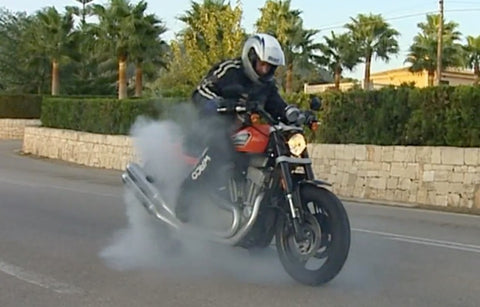
Harley took the bike racing, too. The AMA Pro Vance & Hines XR1200 Series ran as a support class at the Indianapolis MotoGP round from 2011 to 2014, according to Wikipedia’s Indianapolis motorcycle Grand Prix entry. Every bike on the grid was an XR1200. Riders like Jeremy McWilliams, Steve Rapp and Kyle Wyman won races on them.
That racing history is part of why the bike still has a following. It is also why you will find used XRs with race bodywork, rearsets and stripped wiring. Those can be fun, but they are a different purchase from a stock street bike.
Buying a Used XR1200 or XR1200X: The Checklist
The XR1200 is a solid bike with a reliable engine. MCN’s owner reviews rate it 4 out of 5 for reliability. Most of the problems owners report are finish and detail issues, not engine failures. Here is the order we check things in:
- Decode the VIN. Confirm the model year and whether it is an XR1200 or XR1200X. The X costs more and the suspension is the whole reason. Our Harley VIN decoder guide walks through every digit.
- Look at the suspension. On an X, check the fork seals and the shock reservoirs for oil. Ask whether anyone has touched the clickers. A bike that feels harsh or wallowy may just be set up wrong.
- Check footpegs and controls. MCN owners report loose footpegs and foot controls. Grab each one and wiggle it.
- Inspect the clutch cable and wiring. Owners also report a flapping clutch cable and poor wiring routes. Look for chafing where cables and harnesses run near the frame and engine.
- Look for frame rust. One MCN owner reported the frame “just starting to go rusty.” Check it closely on bikes ridden through wet winters.
- Check the shift linkage and pegs for crash damage. The exposed linkage is the first thing to bend in a tip-over.
- Pull the air filter cover. The filter sits flat under the tank, and Rider’s 2009 test wondered how the exposed element would handle rain. A wet, dirty filter tells you how the bike was kept.
- Listen at idle and ride it warm. A lumpy idle at lights is a known owner complaint. A rough, hesitant engine under load is not normal.
- Ask for the stock parts. Many XRs have aftermarket pipes or tuners. That is fine, but stock exhaust and a clean tune history make a bike easier to sell later.
If the bike has had a performance tune, our guide to Sportster 1200 upgrades explains what stage kits actually do on the Evolution 1200 and what to ask the seller.
What an XR1200 Is Worth Today
Cycle World put the typical used value at $7,125 in 2015, against $10,799 to $11,799 new. Values have moved since then and vary a lot with mileage, condition and whether the bike is an X. Low-mile stock XR1200X models sit at the top of the market. Race-converted bikes and high-mile standard XRs sit at the bottom. Before you make an offer, pull current values from a pricing guide and compare with recent sold listings in your region, not asking prices.
Who Should Buy One
Buy an XR1200 or XR1200X if you want a Harley that handles on a twisty road, you like the Evolution engine, and you can live with a short tank range. It also makes a great base for a street tracker, since the chassis is already most of the way there.
Skip it if you want a highway bike, a two-up bike, or the lightest possible Sportster. The Harley Nightster is lower and cheaper, and a Street Rod from the liquid-cooled Street family is the modern take on a sporty small Harley.
If you just want a blacked-out Sportster for town, the Iron 883 cost less new and weighs a little less.
For the wider street-tracker and cafe look, our cafe racer motorcycle guide covers where this style came from.
Riding one to the next bike night? Our Built Not Bought biker tees and hoodies are made for riders who respect the heritage.
Sources
- 2009 Harley-Davidson Sportster XR1200 Road Test - Rider Magazine - $10,799 price, engine changes, dyno results, measured weight, seat height, fuel economy and criticisms
- 2011 Harley-Davidson Sportster XR1200X Road Test - Rider Magazine - XR1200X changes, $11,799 price, 573 lb claimed wet weight, dyno results and handling verdict
- 2008 Harley-Davidson XR1200 Review - Motorcycle.com - European launch, claimed 90 hp and 73.8 lb-ft, 550 lb claimed dry weight, brakes and suspension
- 2012 Harley-Davidson XR1200X specifications - Total Motorcycle - Harley’s published 2012 figures used in the spec table
- Harley-Davidson XR1200 (2010-2012) review - MCN - UK prices, owner reliability rating and common owner complaints
- Harley-Davidson XR1200 best used bike - Cycle World - new price range, 2015 used value and Ten Best recognition
- Living with a 2009 Harley-Davidson XR1200 - Visordown - long-term ownership impressions
- Harley-Davidson Sportster - Wikipedia - market launch dates, first 750 US bikes, US discontinuation after 2012
- Harley-Davidson XR-750 - Wikipedia - XR-750 racing record and the XR-1000 comparison
- Indianapolis motorcycle Grand Prix - Wikipedia - AMA Pro Vance & Hines XR1200 Series, 2011 to 2014
For the wider Harley-Davidson story - every engine generation from the V-twin to the Milwaukee-Eight, every model line, every era - see our Harley-Davidson history guide.